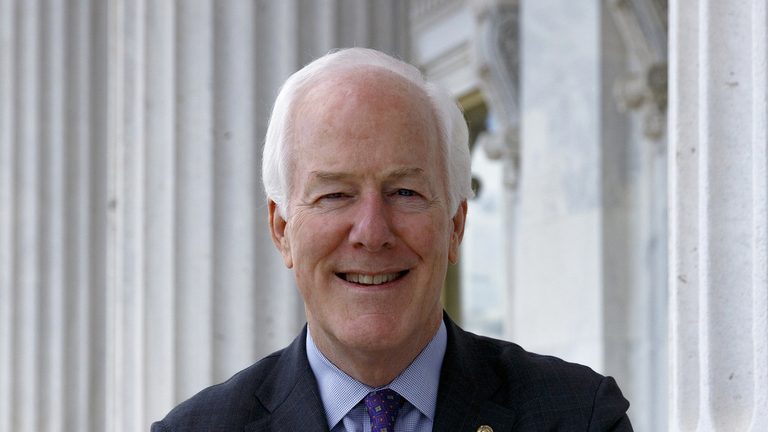
Outgoing Sen. John Cornyn, the only Republican on the Senate Foreign Relations Committee still opposing President Trump’s nominee for U.S. ambassador to Saudi Arabia, has quietly enlisted Democratic senators to block Rep. Wesley Hunt’s confirmation. The hold, described by sources as a personal vendetta stemming from the March 2026 Texas Senate primary, delays the nomination until at least Dec. 1 despite broad Republican support for Hunt’s credentials.
Nominee’s qualifications
Rep. Wesley Hunt, a Houston‑born combat veteran and former Army Apache helicopter pilot, was nominated by President Trump on Sept. 14 to fill the post vacant since Jan. 2025. In written testimony and at his Nov. 10 confirmation hearing, Hunt highlighted 55 combat missions over Baghdad and two tours as a military diplomatic liaison in Saudi Arabia. Fellow Republicans on the panel, including Sen. Ted Cruz, argue that his experience makes him uniquely suited for the role amid rising regional tensions.
Cornyn’s hold and outreach
Committee Chairman Sen. James Risch announced Wednesday that a senator had placed the nomination on hold until Dec. 1. Multiple Senate sources identified Cornyn as that holdout. On Nov. 7, Cornyn notified Risch that he would not vote for Hunt, and by Nov. 10 he began contacting Democratic members—Sen. Chris Coons, Sen. Jeanne Shaheen, and Sen. Tim Kaine—to oppose the nominee. He also reached out to Republican colleagues such as Sen. John Curtis and Sen. Steve Daines, but met resistance.
One source told The Federalist that Cornyn “has gone to all the Democrats and has whipped them and asked them to vote against Hunt,” adding that other Republicans consider the move “crazy” because “Wesley’s qualified.” Another source called the action “an entirely personal vendetta” that “makes a mockery of whatever pretense to decency or statesmanship Cornyn has left.”
Root of the dispute
The friction traces back to the 2026 Texas Republican Senate primary. Hunt finished third in the March contest, and Attorney General Ken Paxton defeated Cornyn in the May runoff. During the campaign, Hunt criticized Cornyn for partnering with Democrats on red‑flag gun‑safety legislation and urged voters to fire the incumbent. Sources say Cornyn’s opposition is driven by sour grapes rather than substantive concerns about Hunt’s record or residency.
Unlike his open opposition to judicial nominee T. Elliot Gaiser—where Cornyn publicly said, “He’s not from Texas”—Cornyn has avoided stating any formal objection to Hunt, a Texas native. One insider noted that applying the same criteria used for Gaiser does not fit Hunt, describing the effort as “vindictive” behavior by an “angry old man as he’s being escorted out of the building.”
Pattern of obstruction
This is not Cornyn’s first hold on a Trump nominee. He previously delayed the confirmation of Texas Attorney General Todd Blanche until he received written assurances on a settlement fund, and he has used blue‑slip leverage against Texas judicial picks. That leverage will end in Jan. when Sen.-elect James Talarico, a Democrat, takes the seat.
National‑security implications
The ambassadorship has been vacant for nearly two years, leaving the United States without a confirmed envoy to a key Gulf partner. Sources stress that Hunt’s military and diplomatic experience in Saudi Arabia positions him well at a time when other regional posts also lack ambassadors.
Risch’s hold‑over announcement keeps the nomination from advancing out of committee before Dec. 1, giving Cornyn’s outreach additional time to operate. Republican members have expressed frustration that a single outgoing senator is using minority members to block a qualified nominee rather than opposing him openly. With every other Republican on the committee prepared to support Hunt, the sole holdout is Cornyn.
Outlook
Whether the Dec. 1 deadline produces a vote or further delay remains unclear. Hunt’s qualifications and broad Republican backing contrast sharply with the reported personal origins of the hold. For now, the nomination remains stalled by the one Republican source who appears determined to prevent it from moving forward.
Original reporting: The Dallas Express — read the source article.