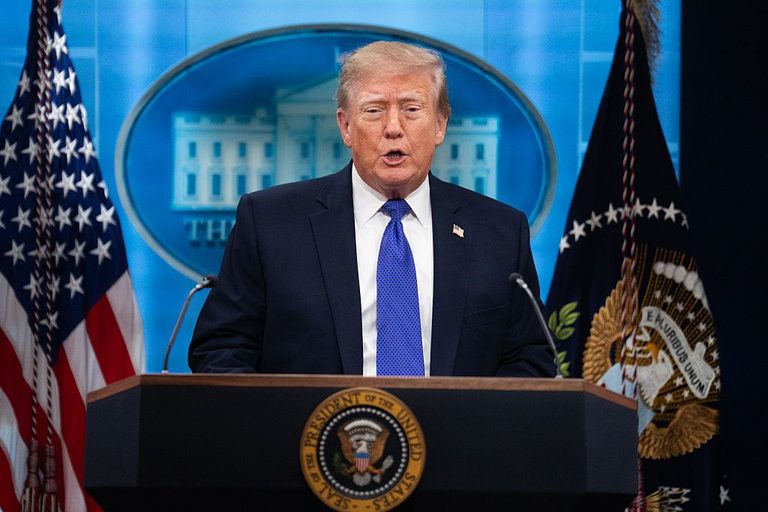
President Trump returned to the White House after completing a high‑stakes summit with China’s President Xi Jinping and Russia’s President Vladimir Putin. In a nationally televised press conference that lasted roughly an hour, the President answered a wide range of questions from reporters, emphasizing his administration’s firm stance on national security and foreign policy.
Key points from the briefing
Trump highlighted the importance of sitting at the table with world leaders, noting that while the United States does not trust Xi or Putin, direct dialogue is essential for protecting American interests. He reiterated that his administration is committed to ending the wars in Ukraine and the Middle East, while acknowledging that the process may take longer than some critics have suggested.
When asked about rumors that Iran is attempting to develop a dirty bomb aimed at Washington, Trump responded decisively: “We know a lot about what’s happening in Iran. We will not allow that to happen.” The President’s answer underscored his administration’s resolve to prevent any nuclear or radiological threat to the American homeland.
Trump also contrasted his open‑question format with the previous administration’s pre‑planned reporter lists, arguing that a transparent, note‑free briefing better serves the public’s right to honest information.
Administration’s rationale
The Trump administration maintains that direct engagement with China and Russia, even when relations are strained, creates diplomatic leverage that can be used to deter hostile actions. By meeting with Xi and Putin, the President sought to convey that the United States will not be intimidated, while also opening channels for potential de‑escalation.
Regarding the ongoing conflicts abroad, officials in the White House have said that a realistic timeline is necessary to achieve lasting peace. They contend that premature promises could undermine credibility and that the administration is working with allies and regional partners to secure a stable resolution.
Critics and context
Some analysts from think tanks and media outlets expressed skepticism about the speed at which the President expects to end the wars, noting that complex geopolitical dynamics often require prolonged negotiations. However, the administration’s spokesperson emphasized that progress is being made and that the President’s optimism reflects confidence in diplomatic tools rather than unrealistic expectations.
In the broader national conversation, the President’s firm language on Iran aligns with recent congressional hearings that have highlighted the need for vigilance against nuclear proliferation. Lawmakers from both parties have voiced concern over Iran’s potential development of radiological weapons, reinforcing the administration’s warning.
Local reaction
Listeners of Indianapolis‑based talk radio station 93.1 WIBC, where hosts Hammer and Nigel dissected the briefing, praised the President’s willingness to answer questions without a prepared script. They noted that the open format allows citizens to hear directly from the leader about critical security issues.
While the hosts expressed personal distrust of Xi and Putin, they also acknowledged that President Trump’s presence at the summit signals a proactive approach to foreign policy that many Americans support.
Looking ahead
The administration plans to continue its diplomatic outreach while monitoring Iran’s activities closely. Officials indicated that further briefings will be scheduled as new information emerges, ensuring that the American public remains informed about the nation’s security posture.
For a full audio replay of Hammer and Nigel’s analysis, visit 93.1 WIBC’s YouTube channel.
Original reporting: 93.1 WIBC (Indianapolis) — read the source article.