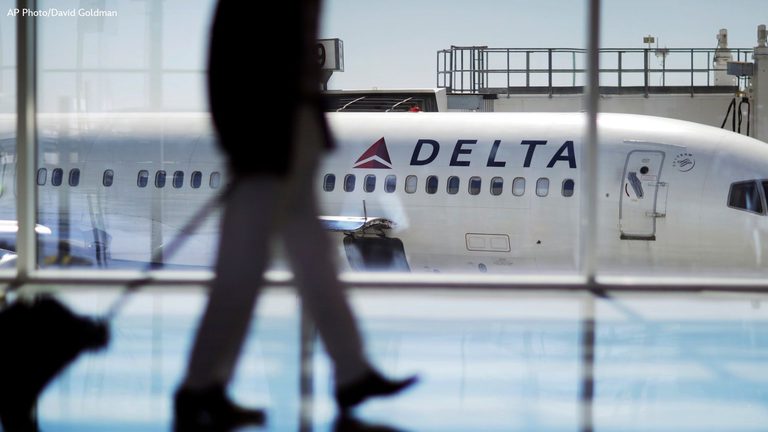
Delta Air Lines announced a system outage early Sunday that has disrupted a core flight‑operations function: the weight‑and‑balance calculation used to ensure aircraft are properly loaded before takeoff. Because the automated system is offline, pilots and ground crews are resorting to manual procedures, a time‑consuming process that has slowed departures across the carrier’s network.
Scope of the disruption
According to Delta’s statement, the outage affects the airline’s weight‑and‑balance system, a critical safety tool that determines how cargo, passengers, and fuel are distributed on each aircraft. The airline estimates that roughly 20% of its flights – about 700 departures – were delayed as of Sunday morning. The delays are not confined to a single hub; they are being felt on routes throughout the United States.
Delta’s response
Delta officials said teams are employing manual workarounds to keep aircraft moving while engineers work to restore the automated system. “Delta teams are using manual workarounds this morning to safely get flights departed while work continues to restore automation,” the airline said in a press release. The carrier also thanked passengers for their patience and praised its employees for their professionalism during the disruption.
Coordination with regulators
The Federal Aviation Administration (FAA) has activated a Ground Delay Program for Delta flights, a standard measure that helps manage air‑traffic flow when an airline experiences operational challenges. The FAA’s involvement is intended to reduce congestion at busy airports, particularly Delta’s primary hub in Atlanta, Georgia, where the airline handles a large share of its domestic traffic.
Impact on travelers
Passengers affected by the outage have reported longer wait times at check‑in counters and gate areas, as well as revised boarding schedules. While the airline has not provided a definitive timeline for full system restoration, it emphasized that safety remains the top priority and that crews are following established manual protocols to ensure each flight meets regulatory requirements.
What’s next?
Delta’s technical teams are working around the clock to diagnose the root cause of the outage and bring the weight‑and‑balance automation back online. The airline has not indicated whether the issue stems from a software glitch, hardware failure, or external factor, but it assured the public that updates will be shared as they become available.
Travelers with upcoming Delta itineraries are encouraged to monitor the airline’s website, mobile app, or customer‑service lines for the latest status information. Those who have already been delayed may be eligible for rebooking options or refunds, depending on the specific circumstances of their flight.
Industry context
System outages of this nature are relatively rare in the aviation industry, where airlines rely heavily on automated tools to manage complex scheduling and safety calculations. When they do occur, airlines typically revert to manual processes that have been maintained as a backup for decades, ensuring that safety standards are never compromised.
Delta’s swift communication and coordination with the FAA illustrate the airline’s commitment to transparency and passenger safety, even amid unexpected technical challenges.
Original reporting: Brookhaven News – ABC7 New York — read the source article.