Springfield residents should watch the Illinois General Assembly’s upcoming veto session, where lawmakers are debating the POWER Act – a bill that would standardize reporting, ban nondisclosure agreements, and require water‑impact permits for data centers across the state. The legislation comes as a University of Illinois report highlights resident concerns about transparency and rising utility bills in three benchmark communities: DeKalb, Aurora and Elk Grove Village.
According to nprillinois.org, the report found that Illinois lacks a master list of data centers, has fragmented oversight, and relies on voluntary disclosures for water and electricity use. Only Meta’s facility in DeKalb voluntarily reported its consumption, drawing roughly 76,000 gallons of water per day – about 2.5% of the city’s average daily use. Aurora, meanwhile, is the only community that currently requires data centers to report such data.
Capitol News Illinois noted that the Union of Concerned Scientists estimates data centers will drive 64‑72% of the state’s electricity demand growth from 2025 to 2030. The report also documented a rise in ComEd bills on June 1, 2026, linked to new electricity prices set by PJM Interconnection and higher data‑center demand.
Brad Tietz, director of government affairs for the Data Center Coalition’s Midwest region, told Capitol News Illinois that utility‑bill increases and water‑use concerns are the two biggest misconceptions about data centers, and that greater transparency would combat misinformation. He cited S&P Global data showing the technology and web‑services sector accounted for over 84% of U.S. carbon‑free energy procurement in the first half of 2025, underscoring the industry’s role in clean‑energy markets.
Financial impacts are also significant. Frank Manzo of the Illinois Economic Policy Institute told Rockford News First that from 2022 to 2024, data centers contributed $46.6 million in DeKalb, $5.6 million in Aurora and $88.7 million in Elk Grove Village in property taxes and other revenues. Those funds helped pay for a new elementary school in DeKalb and funded $200 gift‑card giveaways to neighborhoods in Elk Grove Village.
The POWER Act would require water‑resource and scarcity plans, monthly and annual water reporting, and a Water Impact Permit managed by the Illinois Environmental Protection Agency. It also proposes that data centers bring new clean energy built in Illinois and clarifies who pays for electricity and grid upgrades.
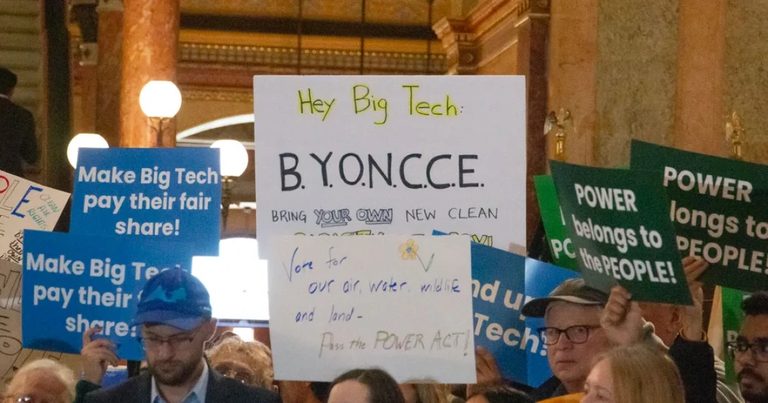
During the first week of the veto session, which began on Nov 17, advocates rallied at the state Capitol in support of the bill, and Gov. JB Pritzker expressed backing. Later, the Senate Energy and Public Utilities Committee convened for a two‑hour discussion but did not vote on the proposal.
What’s next: The veto session runs for two weeks, ending mid‑December. Lawmakers will consider the POWER Act before the session’s close, and a final vote is expected before the governor’s veto deadline. Springfield officials and residents should monitor the outcome, as the bill could shape future data‑center development, utility costs, and local tax revenue in the capital region.
Sources: nprillinois.org, capitolnewsillinois.com, rockfordnewsfirst.com