The U.S. Department of the Treasury announced today that four Iranian regime insiders have been placed on the sanctions list, targeting a shadow network of middlemen accused of running illicit oil sales and pocketing billions of dollars meant for Tehran.
Operation Economic Outcast Continues
The action is part of Operation Economic Outcast, a financial campaign launched on August 24, 2026, to cut off Iran’s remaining cash lifelines. Treasury officials say a U.S. military blockade has brought Iranian oil exports to a standstill, with no new oil loaded onto vessels since the operation began.
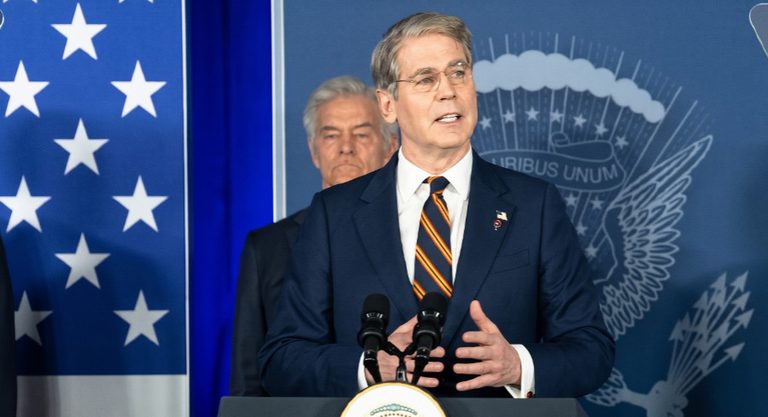
“Iran’s tyrannical regime never fails to put its own interests before those of its own citizens, even as ordinary Iranians face shortages of bread and fuel,” Treasury Secretary Scott Bessent said. “The regime has exhausted its seaborne oil supply, and it may never see the revenue from the oil it has already sold. The ship is sinking.”
Key Figures Sanctioned
Leading the network is Mohammad Javad Bavand, a former intelligence officer with the Islamic Revolutionary Guard Corps, and Majid Taj, the brother of the Iranian Football Federation’s president. Officials say Bavand recruited Taj and a circle of personal contacts to hunt down missing oil money abroad and sell off Iran’s dwindling reserves. Despite owing Tehran billions from previous deals, the group remains Tehran’s go‑to choice for moving crude.
Bavand also partnered with Sepehr Energy Jahan Nama Pars Company, a sanctioned front company that sells oil for Iran’s military leadership. Both men were sanctioned under Executive Order 13902 for operating in Iran’s petroleum sector.
Additional Individuals Targeted
Two sons of high‑ranking regime figures were also blacklisted under Executive Order 13224, a counter‑terrorism measure. Mohammadhossein Servati, son of IRGC Brigadier General Mohsen Servati, held executive roles at Sepehr Energy Hamta Pars and Xin Rui Jin Trad Co., Limited—a front that brokered Iranian oil shipments to independent Chinese refineries.
Meanwhile, Mojtaba Arabnejad, son of Mahan Air CEO Hamid Arabnejad, allegedly used his family name and ties to the IRGC‑Qods Force to oversee oil sales that bankrolled the airline. Authorities say he also used agricultural businesses as a front to purchase aircraft parts and military weapons.
Impact of the Sanctions
The sanctions immediately freeze any U.S.-based assets belonging to the four men, as well as any companies they own fifty percent or more of. Americans are barred from doing business with them, and foreign banks or firms that knowingly help them bypass the restrictions risk being cut off from the U.S. financial system, alongside steep civil and criminal penalties.
To encourage tips, the Treasury’s Financial Crimes Enforcement Network noted that whistleblowers who report sanctions violations resulting in penalties over $1 million may qualify for financial rewards. While the department pointed out that blacklisted individuals can petition for removal if their behavior changes, officials made clear that the United States—working alongside partners in Europe and the Gulf—will keep tightening the screws until Tehran shifts course.
Original reporting: Tampa Free Press — read the source article.