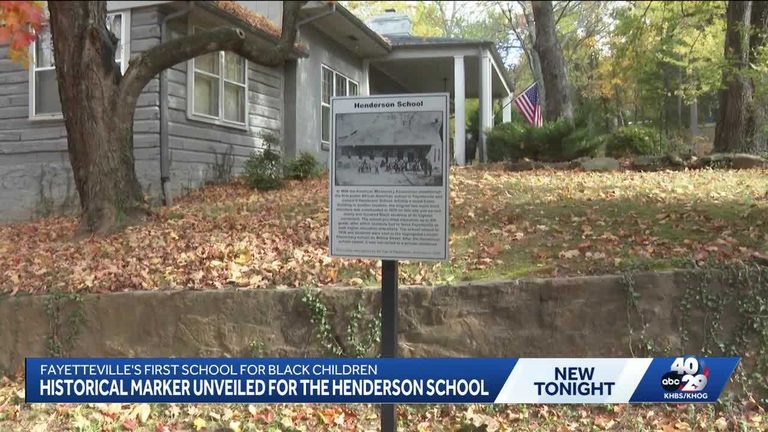
Fayetteville marked a poignant moment on Saturday with the dedication of a historical marker on North Olive Avenue honoring Henderson School, the city’s first public school for African American students. The ceremony highlighted the school’s foundational role in the community from its establishment in 1866 through its closure in 1936.
Founding and Early Years
Founded by the American Missionary Association, Henderson opened its doors in 1866, shortly after the Civil War, to provide education for Black children in a segregated South. A two‑room brick building was erected in 1870, offering classes through the eighth grade. For families seeking further education, students had to travel beyond Fayetteville, underscoring the limited opportunities of the era.
Personal Stories from the Last Living Alumna
Jessie Bryant, who attended Henderson from 1931 until its closure in 1936, is believed to be the school’s last living student. Bryant recalled the sense of belonging the school fostered, saying, “You got the feeling you belong, and because of that you felt like you wanted to work harder.” Her daughter, Lois Bryant, added that the school’s legacy reflects the broader struggle for educational access, noting that earlier generations “walked to school; everybody walked home from school. It didn’t matter if it was rain, sleet, snow, shine.”
After Closure and Preservation Efforts
When Henderson closed, its students were transferred to the segregated Lincoln Elementary School on Willow Street. The original Henderson building later became a private residence. Today, local historians and community volunteers have worked to document the school’s history, emphasizing the importance of preserving these stories for future generations.
Community Impact of the Marker
City officials hope the marker will serve as an educational tool, reminding residents of the barriers Black students faced and celebrating the perseverance of those who attended. Organizers expressed that remembering Henderson’s history is a “stepping stone” for young people to pursue their goals, echoing Bryant’s sentiment that the school’s legacy should inspire “them to go in life, whatever phase they want to — give it your all.”
The dedication ceremony featured remarks from city leaders, descendants of former students, and representatives of the American Missionary Association, all underscoring the shared responsibility to honor and protect the narratives of Fayetteville’s diverse past.
Original reporting: 40/29 News KHBS Fort Smith (local) — read the source article.