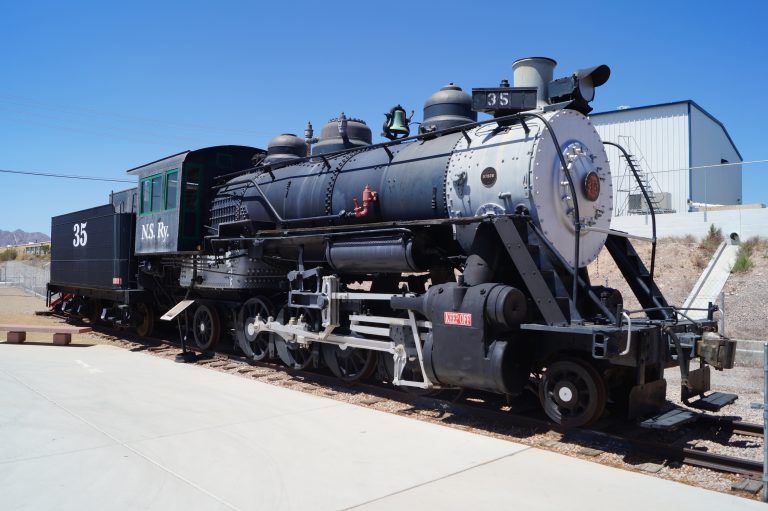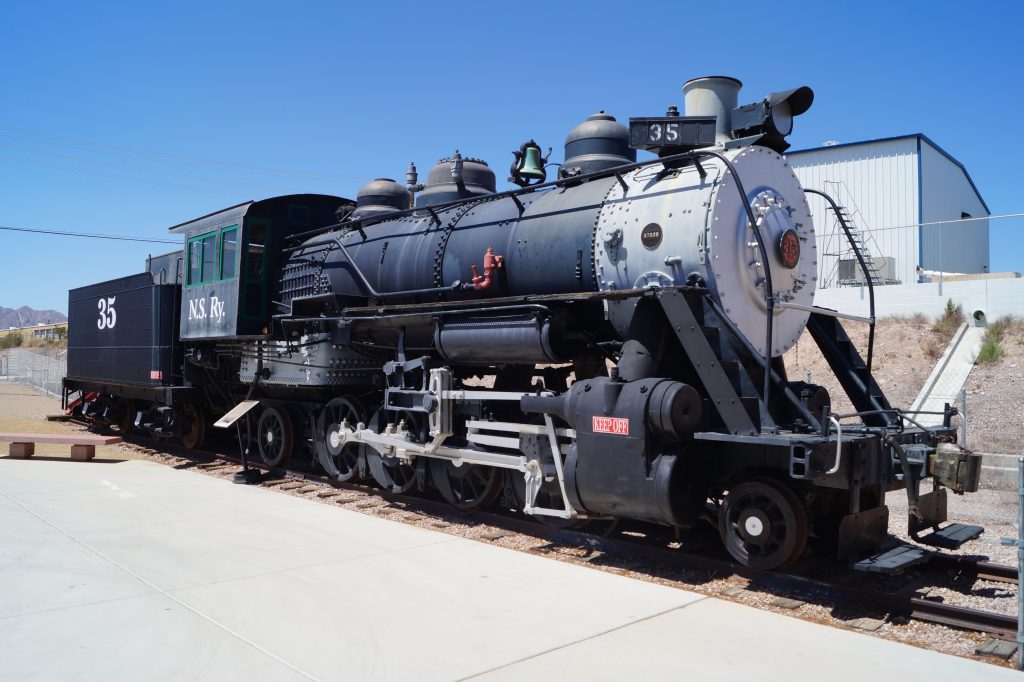
What exactly does a working steam locomotive sound like from ten feet away? That question tends to answer itself the moment one of the Nevada State Railroad Museum’s restored engines fires up on a weekend morning and the sound rolls across the high desert like nothing else in the valley. The museum sits in Boulder City, about fifteen minutes from downtown Henderson on U.S. 93 — close enough that Henderson families treat it as a regular outing, far enough that it still feels like a genuine excursion.
The collection centers on equipment from the historic Boulder Canyon Project Railroad, the construction line that served Hoover Dam during its building years in the early 1930s. That alone sets this place apart from generic rail museums stocked with orphaned rolling stock. The locomotives, work cars, and passenger coaches here have a specific story and a specific desert — this desert — attached to them. Scale models, photographs, and original documents fill the indoor galleries, tracing how six thousand workers moved materials across some of the most inhospitable terrain in the American Southwest.
The outdoor grounds hold the larger pieces: massive steam locomotives, a rotary snowplow that looks impossibly large given the surrounding landscape, flatcars, and cabooses that visitors can walk alongside and, on certain days, board. On operating weekends — typically most Saturdays and Sundays from roughly October through early summer, with reduced schedules in peak heat months — the museum runs actual train rides around the property behind restored steam or diesel power. Fares are modest, usually under ten dollars for adults and less for children, with general museum admission running around eight dollars for adults. The rides are short, maybe ten or fifteen minutes of looping track, but the experience of riding equipment from the 1930s carries a weight that photographs do not.
Saturdays in spring draw the most visitors — school groups, retired rail enthusiasts with field notebooks, and families whose kids have realized, mid-ride, that trains are considerably more impressive than a screen. The staff and volunteers who work the operating days tend to be deeply knowledgeable; conversations at the locomotive tend to run long, and nobody seems to mind. The pace is unhurried in a way that parks with ticketing queues rarely manage.
The museum shares grounds with the Boulder City/Hoover Dam Museum, and both facilities are worth a visit in the same afternoon. Boulder City itself, two miles up the road, has a walkable downtown with lunch options and a time-capsule quality — it was built as a federal government company town and still has the grid and the shade trees to prove it.
For Henderson residents looking for a weekend outing that doesn’t involve a casino floor or another shopping plaza, the railroad museum offers something genuinely different: machinery that actually runs, history that is specific rather than generic, and enough open space that children have room to move while adults look at something worth looking at. The ride back along U.S. 93, with Sunrise Mountain visible to the northwest, closes the loop on a morning that earns its distance.