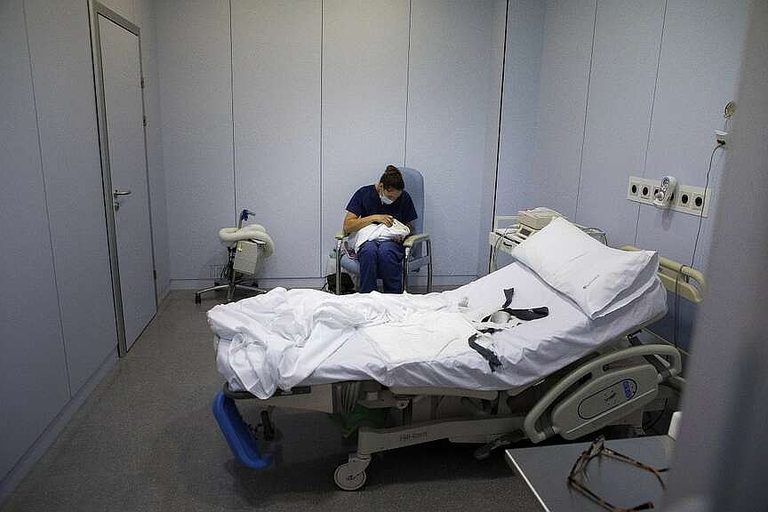
Arkansas officials released a quarterly report on postpartum Medicaid that reveals a stark gap in coverage for new mothers. Of the 5,039 women whose pregnancy Medicaid ended after 60 days, only 129 – just 2.6% – were documented as having another source of insurance.
State policy under fire
Governor Sarah Huckabee Sanders has repeatedly argued that extending pregnancy Medicaid to 12 months would be “duplicative” of other insurance options. The governor’s office points to the Healthy Moms, Healthy Babies Act, signed in 2025, which earmarks $45 million annually for maternal and infant health initiatives and the Rural Health Transformation Program.
Critics, including Christin Harper of Arkansas Advocates for Children and Families, say the data proves the opposite. Harper notes that the percentage of women losing coverage this quarter mirrors the same rate from the third quarter of 2024, indicating no improvement despite the governor’s stance.
Numbers from the report
According to the Arkansas Department of Human Services, 62% of the 5,039 women remained eligible for some form of Medicaid after the 60‑day cutoff, while 38% lost eligibility either at the end of the period or earlier. Of those who lost eligibility, only 129 reported moving to another insurance plan, though the department’s spokesman, Keith Metz, cautions that many may have failed to self‑report.
The report also shows that 28% of women who lost coverage had incomes above the pregnancy Medicaid eligibility threshold of 214% of the federal poverty level – $46,310 for a two‑person household or $70,620 for a family of four. Because the state’s Medicaid expansion program, ARHOME, caps eligibility at 138% of the federal poverty level, some mothers fall through the cracks.
Impact on families
Health advocates stress that continuous coverage is essential for both mother and newborn. Robin Beck, executive director of Healthy Moms, Healthy Babies America, calls the findings a reminder that families need uninterrupted care, paid leave for recovery and bonding, and home‑visit services.
Maternal mortality remains a crisis in Arkansas, ranking 44th of 49 states, with 71% of maternal deaths occurring in the postpartum period. The state’s Maternal Mortality Review Committee classifies 94% of those deaths as preventable, underscoring the urgency of sustained health coverage.
What families can do
Metz notes that mothers who become ineligible after 60 days can explore the health insurance marketplace, employer‑sponsored plans, or coverage through a family member. However, marketplace premiums have risen, and enhanced federal subsidies expired at the end of 2025, making affordability a growing concern.
Additionally, the report identified 31 teenage mothers who lost coverage before the 60‑day mark, many of whom may be ineligible for other Medicaid programs due to income thresholds. Administrative hurdles, such as missed renewal forms, also contributed to loss of coverage.
Next steps
The Arkansas Legislative Council is set to review the report on Friday morning. Lawmakers and advocacy groups are expected to use the data to push for a 12‑month extension of pregnancy Medicaid, arguing that the current 60‑day limit leaves many families without essential health protection during a vulnerable period.
Governor Sanders’ office has not offered new comments beyond the existing policy rationale, leaving the debate open as Arkansas families await potential legislative action.
Original reporting: Texarkana Gazette — read the source article.