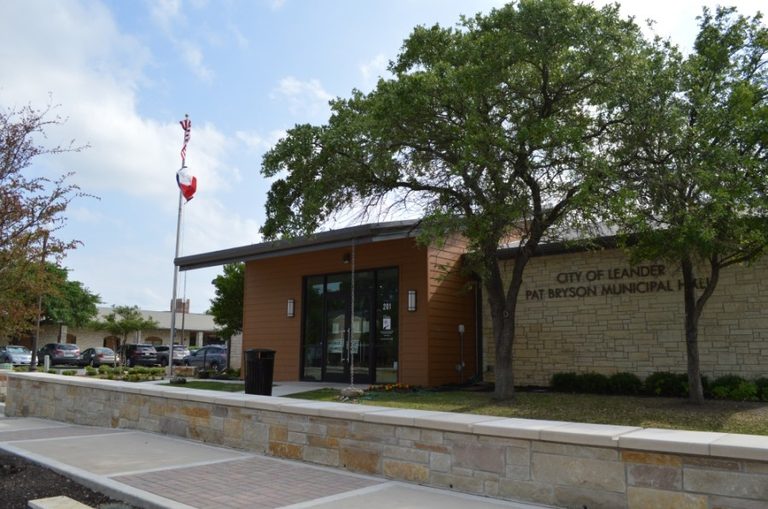
The Leander Planning and Zoning Commission voted 3-2 to delay a decision on a proposed wireless communications tower at 213 Kauffman Loop. The commission will reconvene on Dec. 10 to consider the application again, with the option to approve the special‑use permit, approve an alternate request, or reject the proposal.
Project details
Branch Communications, on behalf of the City of Leander, has applied for a special‑use permit to construct a 190‑foot tower that will serve AT&T and Verizon customers. Although the site is zoned commercial, the permit is required because the tower’s planned height and proximity to the road exceed standard zoning allowances.
The tower is intended to improve cellular coverage along the rapidly growing Highway 29 and Ronald Reagan Boulevard corridor, as well as to enhance connectivity for first responders and public‑safety notifications, according to the application. The proposed structure would be disguised as a tree to conceal the antenna array.
Community concerns
During the public comment period, several residents, including parents of children at nearby Valor Charter School, expressed opposition. Their primary concerns centered on the tower’s proximity—approximately 690 feet northwest of the school—and potential health impacts.
Vincent Huebinger, the land and development consultant for the project, responded that the tower complies with all radio‑frequency emission guidelines. He noted that standing directly in front of an operating microwave can result in higher exposure than standing beneath a cellular tower, emphasizing that the tower operates well within federal safety standards.
Technical and regulatory considerations
The site’s required setback for a structure of this height is typically three times the tower’s height, or 570 feet. The application proposes a reduced setback of 313 feet, citing the presence of a neighboring city water tower and a Brazos Electric tower that are not available for shared use.
Commissioners James Oliver and Tyler Bray indicated openness to postponing the vote to give residents additional time to review the proposal. Oliver stated he would support the tower unless credible evidence emerges that cellular towers pose health risks.
Economic and public‑safety rationale
Madison Gessner, an AT&T representative, highlighted frequent complaints from customers about dropped calls in the area. City documents echo this concern, noting that inadequate coverage can limit the readiness and competitiveness of an area for future development.
From an economic‑development perspective, the city’s own statements argue that robust telecommunications infrastructure is essential to attract and retain businesses, support existing employers, and accommodate projected employment growth.
Next steps
The commission’s next meeting on Dec. 10 will determine whether the special‑use permit is approved, modified, or denied. Residents are encouraged to submit any additional comments before that date.
Original reporting: Community Impact — Austin — read the source article.