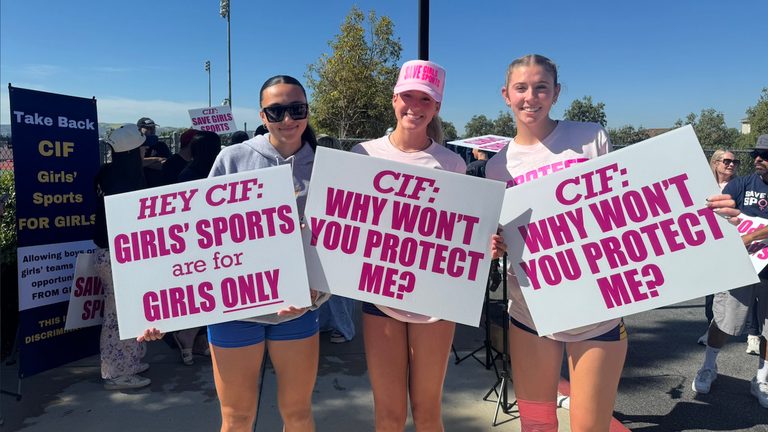
On Thursday the Chino Valley Unified School District Board of Education in California voted 4‑1 to adopt a policy that bars biological males from participating in girls’ sports, using girls’ locker rooms, showers, or sharing hotel rooms on school trips. The measure, authored by outgoing board President Sonja Shaw, was passed despite a warning letter from Attorney General Rob Bonta’s office that the rules conflict with state law.
Board’s rationale
Shaw told OutKick that the policy, titled “Fairness in Girls’ Athletics and Privacy in Sex‑Based Facilities,” is a “common‑sense” step to protect the privacy and safety of female students. She emphasized that eligibility will be based on the sex recorded at birth, using existing enrollment records, birth certificates, or a statement from a licensed health‑care provider when records are unavailable.
“We are the first district in California to put these protections into formal board policy,” Shaw said. “Parents should not have to wonder whether their daughters’ privacy and safety are being protected.” The board’s vote came during Shaw’s final meeting before she leaves the board after an unsuccessful run for state superintendent.
State officials push back
California Attorney General Rob Bonta’s office, represented by Deputy Attorney General Edward Nugent, warned that the policy conflicts with the California Education Code, which permits transgender students to compete according to their gender identity. Nugent urged the district to reject or at least delay the vote to allow further discussion of the legal clash.
The state’s position reflects California’s longstanding protections for transgender students, a point of contention with the Trump administration, which has argued that federal Title IX does not require schools to accommodate gender‑identity‑based participation.
Federal backdrop
The district’s policy cites the U.S. Supreme Court’s June 30 decisions in West Virginia v. B.P.J. and Little v. Hecox, which upheld state laws restricting girls’ sports to biological females. While those rulings protect state‑level statutes, they do not resolve the broader question of whether Title IX requires inclusion of transgender athletes.
Earlier this year a federal district court dismissed the Trump administration’s lawsuit against the California Department of Education and the California Interscholastic Federation, finding insufficient legal notice to impose the federal government’s interpretation as a condition of funding.
Local reaction
Supporters of the board’s action, including many parents and pro‑life advocacy groups, praised the move as a defense of children’s constitutional rights and family values. Critics, primarily teachers’ unions and LGBTQ+ advocacy organizations, labeled the policy discriminatory and warned it could expose the district to lawsuits.
Shaw responded, “The only controversy here should be that there was any opposition at all,” and urged other California districts to follow suit.
What’s next?
The policy directs the superintendent to consult legal counsel and take steps to protect federal funding if state requirements are applied in a way that conflicts with the new restrictions. The district will likely face legal challenges from the Attorney General’s office and civil‑rights groups, setting the stage for a possible courtroom showdown that could shape the future of sex‑based sports eligibility across the state.
Original reporting: Fox News (HLL/CB) — read the source article.