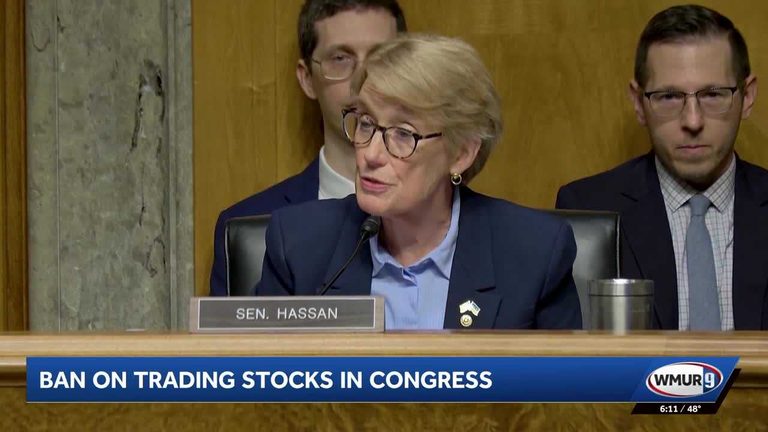
New Hampshire Democrat Sen. Maggie Hassan said Friday that the powerful committee she will chair next year will take the lead on drafting legislation to prohibit members of Congress and executive‑branch officials from buying and selling individual stocks while in office. The move is framed as a direct effort to curb the perception of a “D.C. swamp” where lawmakers profit from the very policies they shape.
Committee leadership and legislative focus
Hassan will become chair of the Senate Homeland Security and Governmental Affairs Committee in January. She told reporters the committee will make a bill that bans stock trading by elected officials a “top of the list for priority.” The proposed legislation would close loopholes that she says remain in the 2012 STOCK Act, which already requires members and staff to disclose trades but does not forbid them.
Key provisions under consideration
According to Hassan, the bill will require that members of Congress and senior executive officials be prohibited from trading individual equities while serving. She emphasized that the focus is on ensuring officials are “focused on the people’s business” rather than personal financial gain. The legislation would also include mechanisms for rapid correction if loopholes or work‑arounds are discovered, with the committee holding hearings to address any gaps.
Family members and broader applicability
One contentious issue the committee plans to examine is whether the ban should extend to immediate family members of lawmakers and officials. Hassan said the committee will “drill down” on the question, acknowledging that opinions vary and that any final rule must be effective in preventing indirect benefits.
Context and political backdrop
The proposal arrives amid a broader national conversation about ethics reform and transparency in government. Critics have long argued that members of Congress can profit from insider knowledge, while supporters contend that existing disclosure rules are sufficient. Hassan’s stance aligns with a growing bipartisan push for stricter ethics standards, though the specifics of the bill will likely be debated on the Senate floor.
Potential impact
If enacted, the ban would represent a significant shift in how federal officials manage personal finances, aiming to restore public confidence in the legislative process. By removing the ability to trade stocks, the legislation seeks to eliminate any appearance of conflict of interest and reinforce the principle that elected officials serve the public, not private profit.
Next steps
The Homeland Security and Governmental Affairs Committee is expected to hold hearings later this year to gather input from ethics experts, watchdog groups, and other stakeholders. Hassan indicated that the committee will work quickly to draft language that can move through the Senate and, ultimately, the full Congress.
While the bill’s exact language remains to be seen, Hassan’s announcement signals that the issue will be a focal point of the committee’s agenda and a priority for lawmakers seeking to strengthen ethical standards in Washington.
Original reporting: WMUR (Hearst) – local news — read the source article.