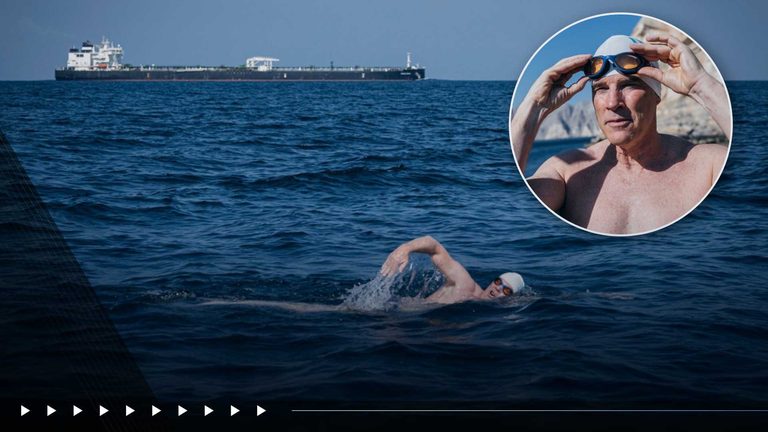
British endurance swimmer Lewis Pugh, a United Nations Patron of the Oceans, spent three days this week swimming sections of the Strait of Hormuz to draw attention to the environmental damage caused by the ongoing war with Iran. Wearing only swimming trunks, goggles and a cap bearing the U.N. logo, he started from the Musandam peninsula and finished after rounding the Cape of Hormuz, covering roughly 15 kilometers (9.3 miles) in total.
Witnessing explosions and oil fires
Minutes after entering the water on Monday, Pugh heard two loud explosions and saw an oil tanker about four kilometers away struck and ablaze. He described the scene as “two booms, fighter jets coming in” and said he realized the need to leave the area immediately. Over the three‑day challenge, he also passed a gas carrier hit by fireballs, noting the water around the vessel was on fire.
Impact on wildlife
Pugh observed large groups of dolphins, turtles and ospreys near his boat and recalled seeing hundreds of turtles along the Omani coast before the war. He warned that oil and chemical pollution from the dozens of damaged tankers since February could have lasting effects on the region’s marine life, mangrove forests and coral reefs, saying such contamination “lasts for generations.”
Why the swim matters
Having previously swum the North Pole, Antarctica and the Hudson River to promote clean water, Pugh uses his feats to spark dialogue about climate change, pollution and biodiversity loss. He urged an end to the conflict, the reopening of the strait for safe navigation, and a concerted effort to clean up the oil spill damage.
Broader context
The Strait of Hormuz is a critical global oil transit route, with roughly one‑fifth of the world’s oil passing through it before the war began on Feb. 28. Iran has recently increased attacks on vessels it deems to be on unauthorized routes, and several tankers have struck sea mines, further escalating the environmental risk.
Original reporting: WLKY Louisville — read the source article.