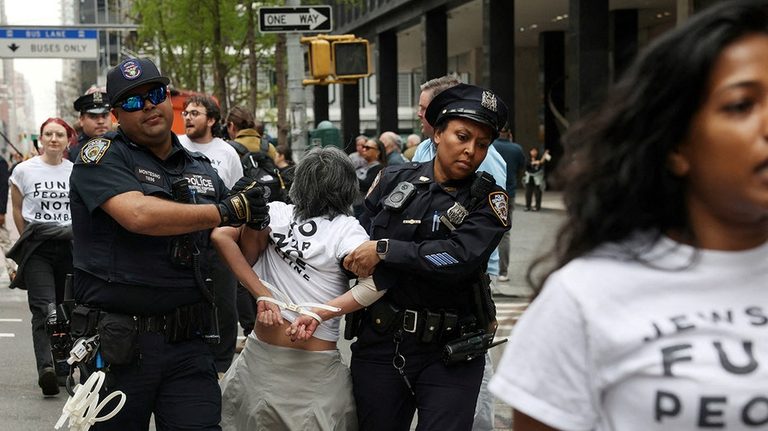
New York City Mayor Zohran Mamdani unveiled a proposal to dissolve the NYPD’s Strategic Response Group (SRG) and create a new civilian‑led Community Dialogue and De‑escalation Division (CDDD). The plan, presented as a step toward greater community engagement, has drawn sharp criticism from two former senior NYPD officials.
Former officials call the change a “rebrand”
Former NYPD Chief John Chell told Fox News Digital that the proposal is a political sleight of hand. \”The problem is…day‑to‑day New Yorkers don’t understand all this gas lighting,\” Chell said, adding that the move is \”nothing more than smoke and mirrors.\” Retired inspector Paul Mauro echoed the concern, arguing the SRG will likely be rebuilt under a new name while still handling mass protests, major crimes and counter‑terrorism.
What the mayor’s plan entails
Mamdani’s office released a statement saying the SRG would be disbanded and its responsibilities transferred to the CDDD, a civilian team intended to act as a buffer between demonstrators and uniformed officers. The mayor also announced the creation of a 30‑officer First Amendment Support Team (FAST) that will remain on the streets to assist the civilian unit.
According to the mayor’s release, the CDDD will focus on dialogue and de‑escalation, while uniformed officers will stay on standby to intervene if necessary. The plan is presented as a fulfillment of Mamdani’s campaign promise to restructure the city’s tactical police capabilities.
Critics warn of delayed police response
Chell and Mauro argue that relying on civilians to mediate volatile crowds could postpone police intervention, increasing risk to both officers and the public. \”Once a cop becomes reactive versus proactive, public safety suffers,\” Chell said. \”When cops become reactive, they tend to hold back and that can get them hurt, and it can get civilians hurt.\”
Mauro added that the civilian team would need to call for police assistance, which could take valuable time. \”You deploy the civilians, they’re trying to talk… and by the time the civilians turn around and say, ‘Police, we need help,’ it may be too late,\” he warned.
SRG’s current role and deployment
The SRG receives intelligence from the NYPD’s Intelligence and Counterterrorism Bureau and is trained to handle crowds that become violent, beginning with verbal de‑escalation and, if needed, physical control. The unit employs tactics such as bicycle crowd management to create temporary barriers.
Data from a recent budget hearing indicated the SRG was deployed in roughly 6% of the 4,255 protests the NYPD facilitated in 2025, primarily when demonstrations turned violent.
Broader debate over policing and public safety
The controversy reflects a larger national conversation about the balance between community‑focused policing and maintaining public order. Critics, including the ACLU’s New York affiliate, argue the SRG’s counter‑terrorism focus can suppress lawful protest and undermine First Amendment protections.
Mamdani’s office did not respond to requests for comment on the criticism. Chell, who announced a mayoral run for 2029, warned that if the mayor’s vision is fully realized, New York could become a \”third‑world city.\”
The timeline for establishing the CDDD remains unclear, with Chell suggesting it may not be operational until at least 2028, if ever.
Original reporting: Fox News (HLL/CB) — read the source article.