Fort Smith is preparing to open the Next Step Neighborhood, a development that will provide 30 tiny homes and an 8,000‑square‑foot service building for people experiencing homelessness. The project, funded by a federal grant, is intended to give residents a safe, lockable space while they work toward permanent housing, a need highlighted by the 2026 Point‑in‑Time Count that recorded 398 unhoused individuals in the River Valley.
According to Arkansas Online, each tiny home is designed for a single occupant, with a few larger units that can accommodate a couple and three units that meet Americans with Disabilities Act (ADA) standards. The homes include a bed, bathroom and shower, a small refrigerator, microwave, clothing storage, and a kitchenette. Dogs are permitted as long as they fit within the community’s guidelines.
Residents will live rent‑free but must sign an agreement to participate in a care plan that addresses issues such as addiction recovery, mental‑health services, and financial stability. The goal is for each resident to secure employment and save enough to transition to permanent housing, with an expected stay of up to six months.
The adjacent service building will house a teaching kitchen, laundry facilities, office space, a multipurpose room for classes and meals, a clothing closet, a volunteer area, and a small health room for nursing and medical students. These resources are meant to support residents as they develop skills and address personal challenges.
Unlike some transitional programs that require residents to be drug‑ and alcohol‑free before entry, the Next Step Neighborhood will initially waive those requirements to reduce barriers to shelter. “We understand we don’t want to make that a barrier to people having safe housing,” said Sharon Chapman, executive director of The Next Step Homeless Services.
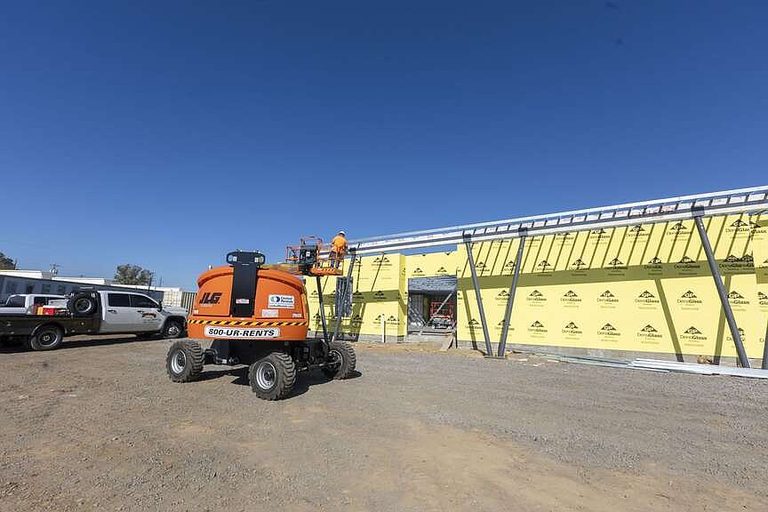
Construction is slated to finish in October 2027, though Chapman noted the project is ahead of schedule and could be completed earlier. Additional fundraising is planned for the spring, offering individuals and businesses the chance to name units and help bring the project to completion.
Local data show a modest decline in overall homelessness from 406 people in 2025 to 398 in 2026, but a sharp increase in transitional housing placements—from 27 people in 2025 to 139 in 2026. The new neighborhood is expected to further boost those numbers by providing a lower‑barrier, supportive housing option.
What’s next: Spring fundraising efforts will begin soon, inviting community members to sponsor unit names. Residents can expect the first occupants to move in once construction wraps up, potentially before the October 2027 deadline.
Sources: arkansasonline.com