What exactly is Fort Industry Square, and why does it sit at the edge of downtown looking like it belongs to a different city?
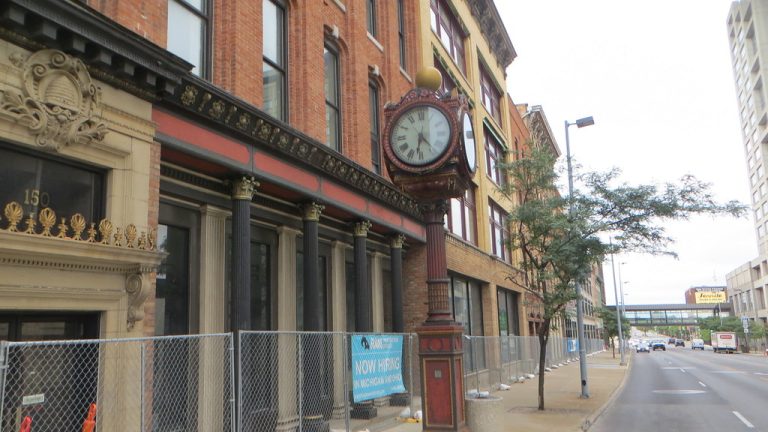
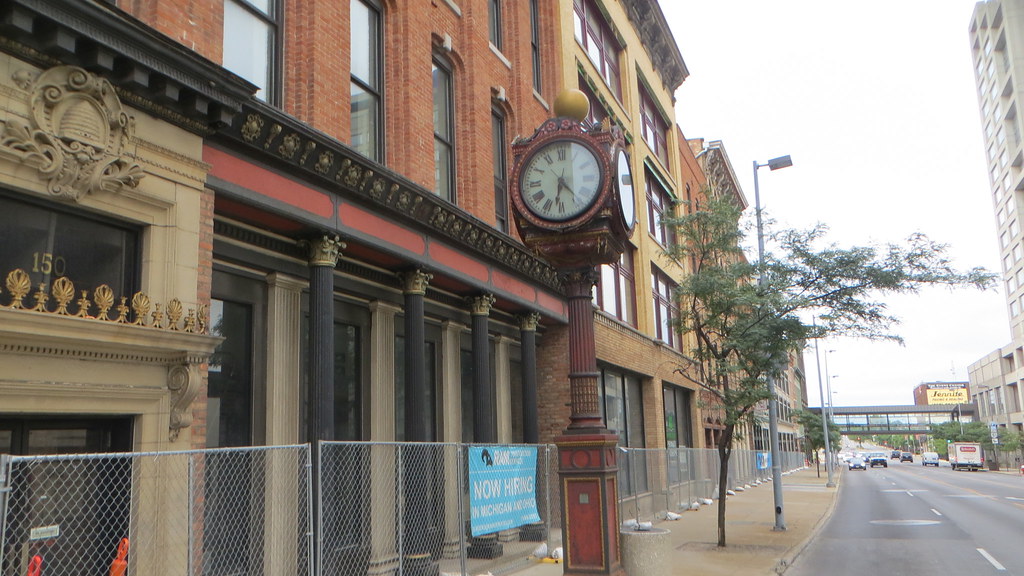
The short answer is that it nearly didn’t survive long enough for anyone to ask. The block anchored by the intersection of Summit and Monroe, a few steps from the Maumee River, spent most of the late twentieth century in serious decay. The buildings that occupy it now — a row of nineteenth-century commercial brick fronts running along Summit Street — were considered expendable by developers more than once. That they’re still standing owes something to stubborn local preservationists and something to the fact that adaptive reuse eventually made financial sense.
The name itself points to real history. Fort Industry was a small American fort established around 1794 near this site, and a treaty with several Native American nations was signed here in 1805 — one of the more consequential and least-acknowledged events in this region’s past. A small stone marker near the river acknowledges this, easy to walk past without noticing. Most people do.
Today the square functions as a low-key mixed-use block rather than a destination in itself. A handful of small businesses occupy the ground floors of the restored buildings — the mix has shifted over the years, with office tenants, a restaurant or two, and service businesses cycling in and out. The architecture is the main event: Italianate cornices, arched windows with original brick detailing, cast-iron facades on a couple of the storefronts. Up close, you can see where repairs were made and where original material was left alone. It’s honest restoration work, not a recreation.
The best time to come is a weekday morning or early afternoon, when the river light is good and foot traffic is light enough to actually look at the buildings without navigating a crowd. Stand on the Summit Street side and face the river: the scale of the block relative to the water gives a reasonable sense of what Toledo’s commercial waterfront looked like before the twentieth century rearranged everything.
There’s no admission, obviously — it’s a city block. Parking is available in the adjacent surface lots for a few dollars, and the International Park greenspace along the river is a short walk east, though that’s a separate stop. If you’re combining this with a visit to the nearby museum ship or the river walk, budget thirty to forty-five minutes just for the square itself, more if you want to read the historical markers carefully.
What the square represents, as much as anything, is a argument Toledo keeps having with itself about what downtown is for and what it owes to what came before. The fact that this block is intact means architects and planners and future residents will have something real to work with — not a facsimile, not a parking lot, but actual nineteenth-century fabric that connects the city to a period when Toledo was a genuinely consequential place on the American interior. That’s not nothing. It might even be worth going out of your way to see.