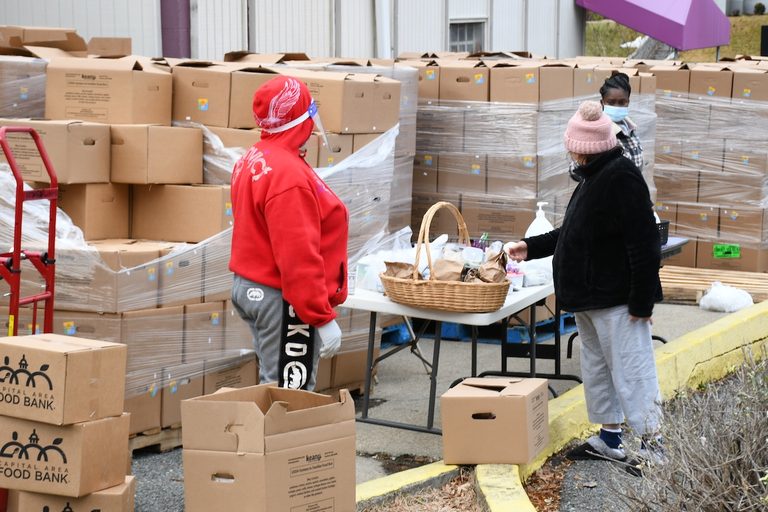
Olivia, a full‑time employee who lives in the District, spends her evenings packing food for neighbors at the Capital Area Food Bank. She began volunteering in January 2021, during the pandemic, and now helps lead a Tuesday packing crew that routinely exceeds its daily box targets.
National Giving Up, Yet Local Need Grows
Giving USA estimates that Americans donated about $617.2 billion in 2025. Individual contributions accounted for $394.2 billion, foundations $117.15 billion, bequests $62.19 billion and corporations $43.67 billion. After adjusting for inflation, total charitable giving rose 3 percent.
Despite the overall increase, the Fundraising Effectiveness Project’s 2024 data show a different picture for small donors. While total individual donations grew 3.5 percent, the number of donors fell 4.5 percent. Contributors giving less than $100 dropped 9 percent, whereas donors giving $50,000 or more rose 3 percent. The result is a larger pool of money but a shorter list of supporters for nonprofits to engage.
Hunger Hits a Five‑Year High in Greater Washington
Radha Muthiah, president and CEO of the Capital Area Food Bank, warned in a September statement that “after unprecedented job losses last year and the deepening pressure of high prices for essentials like gas and food, our community has seen food insecurity reach its highest level in five years.” The food bank’s latest Hunger Report echoes that assessment, calling for “decisive action across every sector.”
Local officials note that the region’s economic indicators—such as employment rates and market performance—appear strong, yet households continue to struggle to put meals on the table. The disparity underscores how macro‑level growth does not always translate into food security for families on the front lines.
Volunteers Keep the Food Flowing
Carol, a retired counter‑intelligence professional, joined the food‑bank team about four and a half years ago. “I retired, and I was looking for something to do,” she said. “I worked for the federal government and helped protect people, and I was looking for a way to help again.” She and a small group of volunteers meet each Tuesday, encouraging one another to exceed the coordinator’s box targets. “The coordinator will say today we need to fill 300 boxes, or 400, and we keep going, ‘Come on, you guys, come on, we can do it,’ and at the end they say, ‘You did 430 boxes,’” Carol recalled.
Olivia adds that volunteering also relieves her post‑work stress. “Knowing that the food I pack goes back to my community keeps me coming back,” she explained.
Regional Giving Beyond Direct Donations
The Urban Institute’s Giving Dashboard includes volunteering, crowdfunding and other forms of support that are not captured in tax‑exempt charity data. Fidelity Charitable reported $255.4 million in grants recommended by D.C.‑area donors through donor‑advised funds in 2024, with 41 percent directed to local charities. The Capital Area Food Bank, So Others Might Eat and Bread for the City ranked among the most popular recipients.
These figures highlight that generosity in the District extends beyond cash gifts, though measuring the full impact remains a challenge.
What Comes Next?
Muthiah stresses that policy changes could further strain families in the coming years. “This year’s Hunger Report underscores the deteriorating state of food security in our region and the need for decisive action across every sector,” she said.
Community leaders, volunteers and donors alike are urged to consider both monetary contributions and hands‑on service as the region confronts a rising tide of hunger.
Original reporting: The Washington Informer — read the source article.