Happy Tails Haven, a volunteer‑operated horse sanctuary located just outside Box Elder, South Dakota, is confronting a steep rise in feed costs that threatens its ability to care for the 42 horses it currently houses.
Hay costs have more than doubled
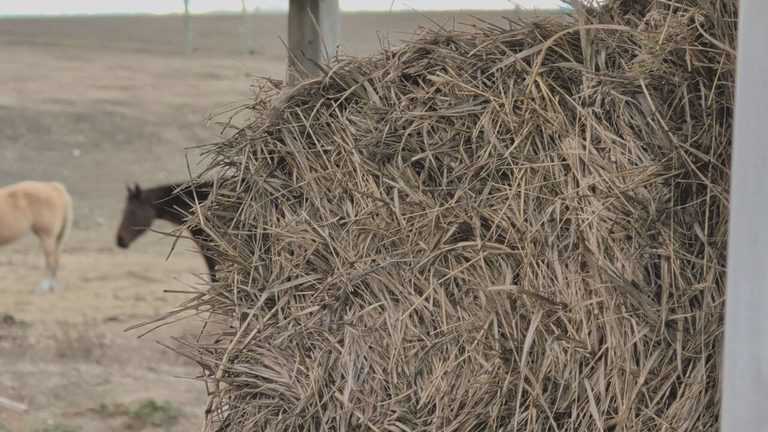
According to Janet Miller, the organization’s vice president, the rescue moves a semi‑load of hay roughly every seven to eight weeks. “We currently pay about $4,600 to $4,800 for a semi‑load,” Miller said, adding that the price could climb to $5,000‑$8,000 once the current supply runs out. She noted that the price per load has more than doubled compared with the same period last year.
Miller attributes the surge to a combination of drought conditions that have reduced regional hay supplies and higher trucking expenses that increase transportation costs. The rescue’s current supplier is scheduled to deliver another load in December, but Miller does not know how much hay will be available after that shipment.
Feeding needs go beyond hay
Hay is only one component of the sanctuary’s feeding program. Older horses and those designated as sanctuary animals also receive senior feed, grain, and alfalfa pellets. Two of the rescue’s long‑term residents, Doc and Shaman, have no teeth and rely on a specially prepared mash that includes senior pellets, grain and alfalfa.
Because of the rising feed costs, the sanctuary has had to tighten its budget. “Money only goes so far and we can’t put ourselves in trouble or risk putting ourselves in trouble to help more,” Miller said.
Increasing demand for rescue services
Happy Tails Haven reports a significant uptick in inquiries from horse owners who are struggling to afford quality hay. The sanctuary now maintains a waiting list for horses in need of a home. Miller explained that the organization prioritizes rescues based on urgency and also works to connect owners with potential new homes, allowing some horses to be rehomed directly without first entering the sanctuary.
Every incoming horse is evaluated by veterinarians, trainers and volunteers. Some are adopted under contract, while others become permanent sanctuary residents.
Volunteer‑driven operation seeks community support
The sanctuary operates without paid staff, relying entirely on volunteers, donations, sponsorships, fundraising events and grant applications. “If you don’t have the money to spare, we’re always looking for volunteers,” Miller said. “Pretty much everyone can help in some way.”
Members of the local community are encouraged to visit the sanctuary’s website, happytailshaven.org, and use the contact form on the home page to learn about volunteer opportunities or to make a contribution.
What residents can do
Residents of Box Elder, Rapid City and the surrounding Black Hills region can support Happy Tails Haven by donating hay, monetary gifts, or their time. Local businesses are also invited to sponsor feed purchases or sponsor a specific horse’s care.
As hay prices continue to climb, the sanctuary’s leadership remains hopeful that a combination of community generosity and prudent budgeting will allow Happy Tails Haven to maintain its mission of providing a safe, lifelong home for horses in need.
Original reporting: KOTA (Gray) – local — read the source article.