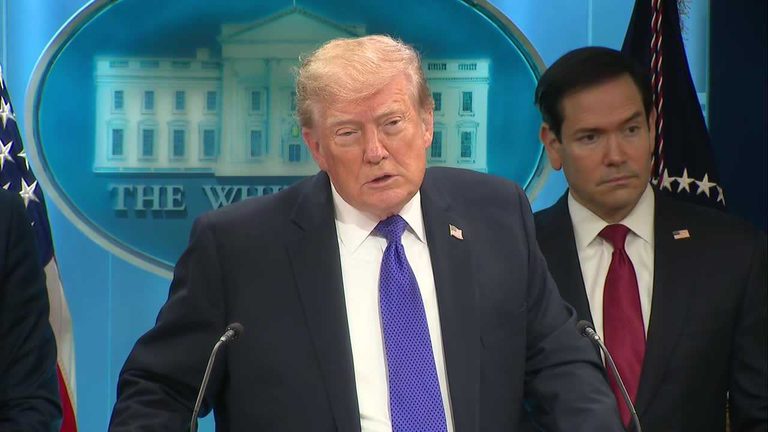
President Donald Trump returned to Washington on Monday and immediately called a news conference to brief the nation on the historic trilateral talks he held with Russian President Vladimir Putin and Chinese President Xi Jinping during his recent Asia trip. The President highlighted concrete achievements that advance American prosperity, national security, and the values of faith‑filled families across the country.
Key Outcomes of the Trilateral Meetings
During the three‑day summit, President Trump secured commitments from both Russia and China to address unfair trade practices that have long disadvantaged U.S. manufacturers and farmers. He announced that the administration will move forward with targeted tariff adjustments designed to protect American jobs while encouraging reciprocal market access for U.S. goods.
In addition to trade, the leaders discussed cooperation on counter‑terrorism and the protection of religious liberty abroad. President Trump underscored that a shared commitment to defending faith‑based communities is a cornerstone of the new partnership, reinforcing the United States’ role as a global defender of Christian values.
Administration’s Rationale
White House officials explained that the President’s direct engagement with President Putin and President Xi reflects a proactive foreign‑policy approach that puts American interests first. By confronting trade imbalances head‑on and seeking collaborative security measures, the Trump administration aims to reduce dependence on hostile regimes and safeguard the American way of life.
“These talks represent a decisive step toward fairer trade and stronger security for our nation,” said a senior administration spokesperson. “President Trump’s leadership is delivering tangible results that protect American jobs, families, and the freedoms we cherish.”
Reactions from Critics and Supporters
Critics from several think tanks warned that engaging with authoritarian leaders could legitimize their regimes. However, the administration pointed out that the agreements were secured on terms that prioritize U.S. sovereignty and do not compromise American values.
Supporters, including several congressional leaders, praised the President’s willingness to confront complex diplomatic challenges directly. They noted that the President’s hands‑on style aligns with the Constitution’s grant of executive authority to conduct foreign affairs.
What This Means for Americans
The announced tariff adjustments are expected to benefit domestic manufacturers, particularly in the Midwest and South, by leveling the playing field against subsidized foreign competition. Families will see the impact through more stable employment opportunities and stronger local economies.
Furthermore, the renewed focus on religious liberty abroad signals a commitment to protecting Christian communities worldwide, a stance that resonates with many faith‑based Americans who value the nation’s founding principles.
Looking Ahead
President Trump indicated that follow‑up meetings are planned to ensure the implementation of the agreements and to monitor compliance. The administration will continue to work with Congress to enact any necessary legislative measures that support these diplomatic gains.
As the President concluded the briefing, he reaffirmed his dedication to putting America first, stating, “We will never stop fighting for the American people, our families, and our faith.”
Original reporting: WESH Orlando — read the source article.