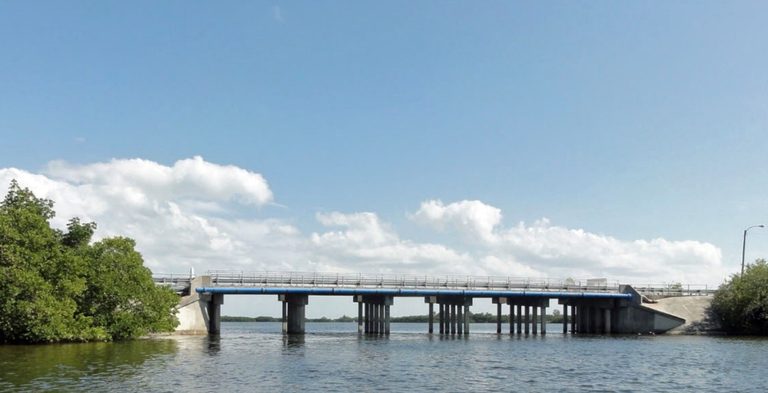
Pinellas County commissioners voted unanimously on Tuesday to seek a $24.2 million federal grant to replace the deteriorating San Martin Boulevard Bridge over Riviera Bay. The bridge, built in 1962, carries about 3,700 vehicles each day and serves as one of only two access routes to Duke Energy’s Bartow power plant.
Why the bridge needs a new span
Engineers have classified the structure as “scour‑critical,” meaning erosion around its underwater supports threatens the foundation. A load test performed in 2001 projected the bridge would remain serviceable until roughly 2032, after which major rehabilitation or replacement would be required. County engineers concluded that widening or rehabilitating the bridge is not feasible because of foundation concerns and other structural limitations.
Funding and construction plan
The total estimated cost of the new bridge is $31.4 million. If the Federal Highway Administration’s PROTECT grant is awarded, it would cover about 80 % of the expense, leaving the county to fund roughly $6.3 million through the Penny for Pinellas sales‑tax fund. The county has already secured an $850,000 earmark for the project and is counting on the grant to preserve local tax dollars for other capital needs.
Construction is slated to begin in late 2027, with design completion expected in spring 2027 and the project running through the summer of 2030. The new bridge will be built just east of the existing span, allowing San Martin Boulevard to stay open throughout construction.
Improved safety and multimodal access
Unlike the current two‑lane bridge, the replacement will feature two vehicular lanes, buffered bike lanes, a six‑foot sidewalk and a 12‑foot shared‑use path that will help close a gap in the Pinellas Trail Loop. Boaters will benefit from nearly double the vertical clearance—rising from 10.5 feet to 17.8 feet at mean high water—and a navigation channel three times wider than today.
Engineers are designing the bridge to withstand projected sea‑level rise of 4.8 feet over a 75‑year service life, as well as more severe weather events. Additional measures such as seawalls, rock barriers and restored mangroves will protect the roadway approach, while a new drainage system will treat stormwater before it enters the bay.
Local impact and broader context
The San Martin corridor serves more than 1,400 homes in the Riviera Bay community. A bridge closure would add roughly 4.2 miles to trips for motorists, utility workers and emergency responders, underscoring the importance of a reliable crossing.
The project comes amid ongoing concerns about aging infrastructure in St. Pete. A 2022 assessment found that 74 of the city’s 138 bridges had exceeded their design life, with seven requiring major rehabilitation or replacement. At that time, city Transportation Director Evan Morey estimated the city needed $12.6 million annually to keep up with bridge repairs, a portion of which typically came from the Penny for Pinellas sales tax.
Pinellas County’s 2026 National Bridge Inventory lists 441 bridges, with 280 in good condition, 154 in fair condition and seven in poor condition. The San Martin bridge replacement is one of the most substantial investments needed to maintain the county’s transportation network.
Coordination with the city
Although the county owns the bridge, St. Pete must relocate water and wastewater pipes attached to the structure before demolition can begin. City council approved $7.14 million in related contracts last December, covering utility relocation for roughly 30,000 residents. The bridge has already reopened to two‑way traffic while pipe work continues through the end of November.
Securing the federal grant will also help mitigate the fiscal impact of Amendment 3, which reduced property‑tax revenue for local governments. While the amendment does not affect the sales‑tax‑based Penny for Pinellas, preserving federal funding for the bridge will free up county dollars for other capital projects.
County officials remain optimistic that the grant application will be approved, allowing the project to move forward on schedule and provide a safer, more resilient crossing for St. Pete’s residents and businesses.
Original reporting: St. Pete Catalyst — read the source article.