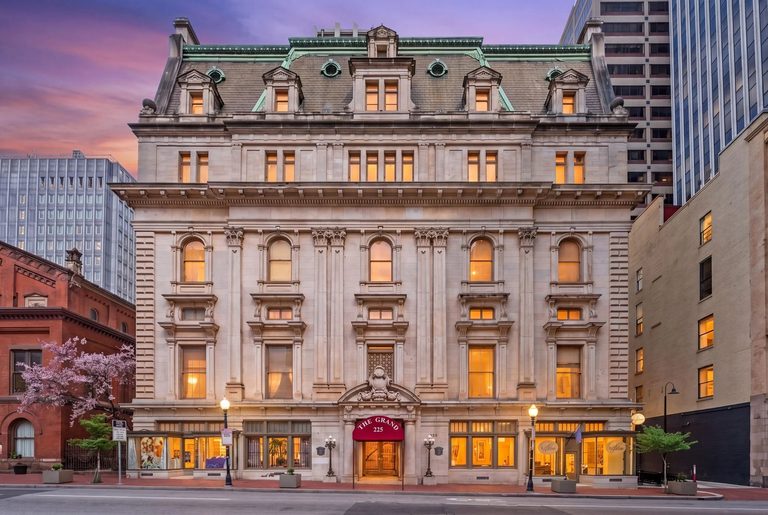
On Friday, members of the Ancient Free and Accepted Masons of Maryland gathered in tuxedos and traditional regalia to retake the Grand Lodge at 225 North Charles Street, a landmark that has stood in downtown Baltimore since 1869. The ceremony featured a procession of Grand Lodge officers, speeches, prayer, and a formal rededication of the building, marking the first time in 32 years that the Masons have owned the property again.
From Receivership to Fraternal Home
The organization bought the structure out of receivership for $2.5 million, according to Tom Foster, the lodge’s secretary. The purchase returns the building to its original purpose after a period in which it operated as an event and conference venue. While the space will continue to be rented for receptions and meetings, the Masons plan to use several of the lavish rooms for lodge gatherings and to attract new members who live in the city.
Historic Architecture and Legacy
Designed in the 1850s by Edmund Lind—who also designed the nearby Peabody Institute—the Grand Lodge was constructed after the Civil War and opened in 1869. Its Renaissance‑revival façade, a seven‑story marble‑clad presence on North Charles, has survived two major fires, including the Great Baltimore Fire of 1904. The interior boasts marble floors, stained‑glass windows, painted ceilings and decorative columns, with rooms named for architectural styles such as the Oriental Room, Marble Room, Corinthian Room, and Edinburgh Hall.
Future Vision
Foster said the downtown location offers a “profit center” for the fraternity’s charitable endeavors, allowing the Masons to generate revenue while preserving a piece of Baltimore’s heritage. The building’s central location, just south of Saratoga and the historic St. Paul’s Church, positions it as a potential hub for community events, weddings, and conferences, adding economic activity to the city’s core.
The Grand Lodge’s return to Masonic control is seen as a win for local heritage preservation and for the organization’s mission of charity, fellowship, and moral development. As the building reopens its doors to both members and the public, Baltimore residents can look forward to a revitalized historic site that honors the city’s past while supporting its future.
Original reporting: Baltimore Fishbowl — read the source article.