Salt Lake County officials announced that the Salt Lake Valley Emergency Communication Center (VEC) will roll out a new artificial‑intelligence phone‑tree system next month. The technology is designed to field the roughly 600,000 non‑emergency calls the center receives each year – calls about noisy parties, stolen‑identity concerns, directions to fingerprinting locations and similar everyday requests.
How the system works
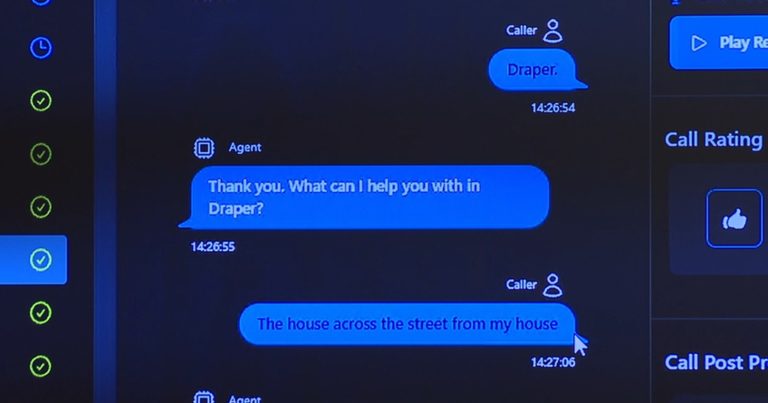
When a caller dials the non‑emergency number, an automated chatbot greets them, gathers the needed details, and either provides the requested information instantly or routes the caller to a live operator for more complex issues. The AI can converse in 30 different languages, helping the diverse Salt Lake community receive assistance without delay.
During testing, the chatbot is programmed to recognize when a situation escalates to an emergency. In those cases, it automatically transfers the call to 911, ensuring that urgent matters receive immediate human attention.
Why the upgrade matters
Executive Director Ivan Whitaker explained that the new system builds on two decades of phone‑tree use at 911 centers across Utah. “This is just an enhancement in our existing phone tree to provide better functionality,” Whitaker said. He emphasized that the AI will not replace dispatchers but will free them to focus on true emergencies, improving response times for critical incidents.
Whitaker noted that about 70% of the inquiries received on the non‑emergency line can be answered with a quick online search. “We don’t want people to feel they can’t dial 911 or the non‑emergency line,” he said. “We’ll take all calls, but we’re looking for a more efficient way to get our citizens information quicker.”
Impact on jobs and future plans
Contrary to concerns that automation could cut jobs, Whitaker assured residents that the VEC is actually expanding its workforce. “Over the last two years we’ve added more positions in this building than in the history of VEC,” he said. The department is also adding a dedicated non‑emergency center, which will create additional staffing opportunities to handle the growing volume of routine calls.
Twenty‑four of Utah’s twenty‑eight emergency call centers have already adopted similar AI technology, making the Salt Lake Valley system part of a statewide effort to modernize public‑safety communications.
What residents can expect
Citizens calling the non‑emergency line can expect faster answers to common questions, multilingual support, and the reassurance that any call turning into an emergency will be promptly transferred to 911. The rollout aims to reduce wait times, lower call‑center congestion, and ultimately improve public safety across the valley.
Whitaker concluded, “We’re never going to be in a position to say we want to decrease or take jobs away. This technology fills a gap created by the increasing call volume each year, and it helps us serve the community more effectively.”
Original reporting: FOX 13 KSTU (Salt Lake County) — read the source article.