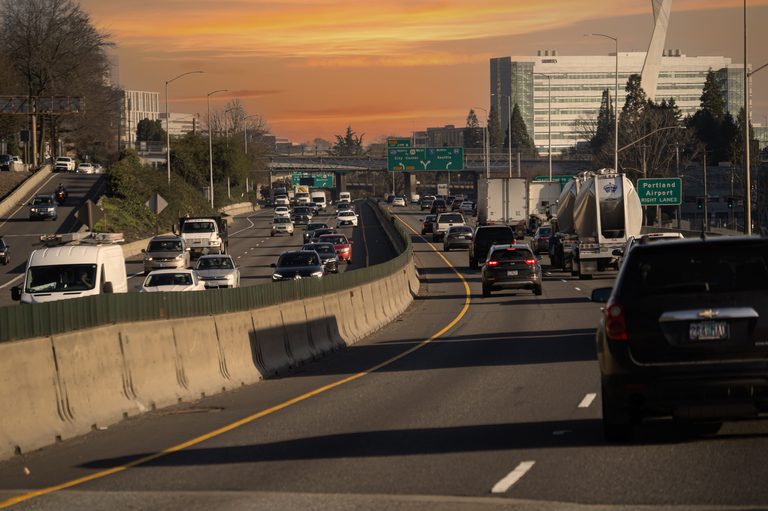
The Transportation Vision Workgroup gathered in Salem Thursday to present its final report on Oregon Department of Transportation’s looming budget gap. ODOT projects a $240 million deficit for the 2027‑2029 budget cycle, driven by the lowest staffing levels since 1999 and a decline in gas tax revenue and vehicle fees.
Workgroup outlines three funding options
During the meeting, the workgroup approved three possible investment scenarios. The most conservative option would cost $644 million, while the second and third options would require $1.27 billion and $1.38 billion respectively. The larger packages include additional funding for freight, bike, pedestrian and rail systems, reflecting a broader vision for Oregon’s transportation future.
State officials stress urgency
Grace Crunican, co‑chair of the workgroup, said the state’s transportation infrastructure needs a long‑term strategy. “The legislature hasn’t really acted to provide an increase in taxes for the road system since 2017,” she noted, adding that the governor and lawmakers must work together to secure a sustainable solution.
Kevin Glenn, ODOT’s communications director, highlighted that a temporary stopgap measure passed in 2025 has kept services stable for this year and next, but that funding redirection will expire at the end of next year. “Luckily, the legislature stepped in. They moved funding from Programs and Projects to allow us to fund services, prevent layoffs, keep services stable for this year and next,” Glenn said.
Potential impacts without a fix
Without a long‑term fix, ODOT could face additional job cuts, and Oregon drivers may experience rougher roads, more delays, or closures. The workgroup’s report emphasizes that the budget shortfall threatens both the agency’s ability to maintain existing infrastructure and its capacity to invest in future projects.
Legislative context
The workgroup’s recommendations come after the 2025 transportation funding package failed to pass in its original form. A scaled‑down version was eventually approved, but voters overwhelmingly rejected most of the fee and tax increases included in that bill earlier this year.
State leaders now have a clear set of options to consider. All three scenarios will be forwarded to the governor’s office for review, and the legislature will need to decide which path best balances fiscal responsibility with the need to preserve and improve Oregon’s transportation network.
What’s next for ODOT?
ODOT officials stress that the workgroup’s proposals are a starting point for a broader conversation about how to fund the state’s roads, bridges, and transit systems over the coming decade. The agency hopes that a collaborative effort between the governor’s office and the legislature will produce a lasting solution that safeguards jobs, maintains safe travel for Oregonians, and supports economic growth.
Original reporting: KPTV FOX 12 Portland (news) — read the source article.