Jackson, Miss. – Democratic lawmakers on the state Capitol floor are calling for a swift investigation after the number of voters listed as inactive on Mississippi’s rolls jumped by almost 60,000 since the 2024 presidential election. The increase coincided with the state’s decision to incorporate data from Experian, one of the nation’s major credit reporting agencies, into its voter‑roll verification process.
Background on the data integration
For years Mississippi relied primarily on United States Postal Service change‑of‑address information to keep voter rolls current. In 2025, Republican Secretary of State Michael Watson announced a partnership with Experian intended to “strengthen the integrity” of elections. Under the agreement, county election officials received access to credit and Social Security data to supplement postal data when confirming voter addresses.
Mississippi law requires officials to move a voter to inactive status when an address is questioned, simultaneously mailing a confirmation card that allows the voter to reactivate the registration. Unlike many other states, Mississippi’s process does not give voters a waiting period before the status change takes effect, meaning some voters discover their inactive designation only when they arrive at the polls and are asked to cast a provisional ballot.
Democratic response
State Rep. Kabir Karriem, chair of the Mississippi Legislative Black Caucus, said, “Mississippians did their part. They showed up to vote. Now election officials owe them an answer to the most basic question in our democracy: Did my vote count?” The caucus held a news conference Thursday, requesting that legislative oversight committees investigate how Experian data was used, what guidance county officials received, and why some provisional ballots from voters marked inactive were counted while others were rejected.
Rep. Zakiya Summers added, “We need urgency, we need accountability, and above all we need to restore public trust in our elections.” Democrats also urged changes to state voting laws, including expanding early voting, allowing online voter registration, and creating a clear process for voters to correct absentee‑ballot issues. They are pushing to repeal or amend statutes that permit third‑party data to determine voter eligibility.
Republican perspective
Secretary‑of‑State Watson defended the use of Experian data, stating that the rise in inactive voters was a direct result of integrating the new information into the overall verification process. In a social‑media video, Watson said, “I don’t apologize for cleaning voter rolls. That is my job.” He also announced that Mississippi has begun using a new vendor, Interactive Data, which draws on all three major credit bureaus for future roll maintenance.
Elizabeth Jonson, a spokesperson for Watson’s office, clarified that the 230,000 inactive voters reported after the Experian integration were “accumulated over more than five years of maintenance by local officials” and that the state does not classify voters as inactive solely on Experian data.
Impact on voters
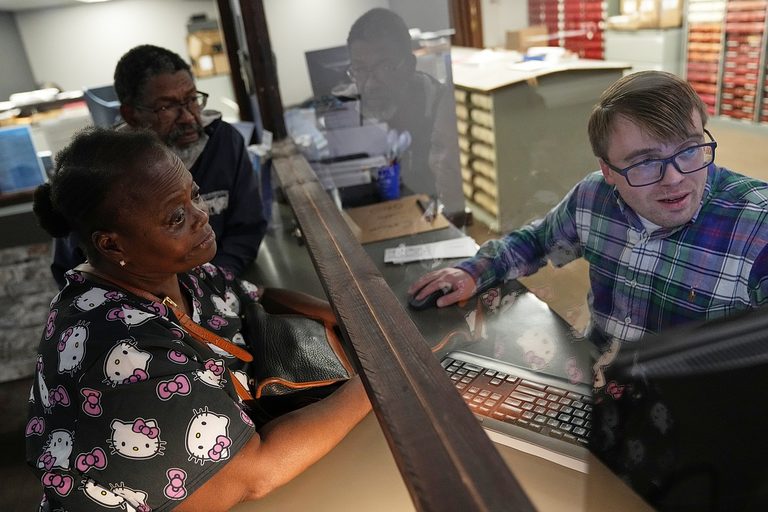
Community advocate Kameisha Smith, who helped register hundreds of voters for the midterms, described her own experience. After being moved to inactive status, she was instructed to cast a provisional ballot, only to learn later that her ballot was rejected because Experian had mistakenly linked her name to an address in San Antonio, Texas. Smith said Experian later removed the erroneous address, but the damage to her voting right had already been done.
Statewide, 21,484 provisional ballots were cast in the November election, a number nearly identical to the 21,321 cast in the 2024 presidential year. However, acceptance rates varied: the secretary‑of‑state’s office reported a 75% approval rate statewide, while Hinds County, which includes the capital Jackson and has a majority Black population, saw only 34% of provisional ballots accepted, down from 60% in 2024.
Next steps
Democratic Rep. Cheikh Taylor, chair of the Mississippi Democratic Party, said he plans to introduce legislation early next year that would increase transparency around the use of credit data and give voters flagged by the system an opportunity to verify their identity before deactivation. “This is not a partisan issue,” Taylor asserted. “The right to vote and the freedom to vote belongs to us all.”
Republican state Sen. Jeremy England suggested that increased transparency could attract bipartisan support, noting, “I don’t think there was anything nefarious involved with it, but Mississippi also does have a dark past when it comes to elections. It’s something we definitely need to look at more and make sure that we’re doing it in a better way, so that if someone’s registered to vote, you know, they’re not marked as inactive for a reason they shouldn’t be.”
The debate underscores a broader tension in Mississippi: balancing the desire for clean, accurate voter rolls with the need to ensure that eligible voters are not inadvertently disenfranchised. As the state looks ahead to the 2027 gubernatorial race and other statewide contests, both parties agree that restoring confidence in the electoral process will be essential.
Original reporting: Texarkana Gazette — read the source article.