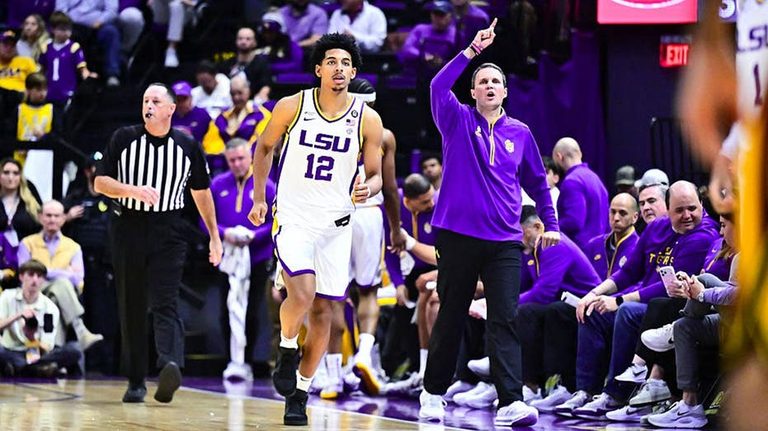
In a rapid reversal, LSU President Wade Rousse told the campus community Thursday afternoon that the university will no longer field former professional basketball player RJ Luis. The decision comes less than 24 hours after Luis scored 11 points in LSU’s win over Louisiana‑Monroe.
SEC pressure drives LSU’s change of heart
SEC presidents were scheduled to hold a conference call Thursday to discuss a range of issues. After Luis took the court on Wednesday, the tone of that call shifted dramatically. Multiple sources told OutKick that SEC leaders discussed options ranging from boycotting LSU games to expelling the university from the conference if the Tigers continued to play Luis.
One source said, “You can only poke the bear so many times before they decide to pounce.” The source added that SEC presidents and chancellors had grown tired of what they called “nonsense” from LSU.
Commissioner Sankey’s blunt assessment
SEC Commissioner Greg Sankey reportedly spoke directly with President Rousse before the broader presidents’ meeting, delivering a straightforward warning about the possible consequences of further defying the conference’s interpretation of a court order. Within two hours of that conversation, Rousse announced the benching of Luis.
Rousse emphasized his role as president of the LSU System, stating, “After further review, I have instructed LSU men’s basketball coach Will Wade not to play RJ Luis.” He also noted that Luis had been eligible and had already played, but the university must now heed the SEC’s concerns.
Legal backdrop
The dispute stems from a preliminary injunction granted by a Baton Rouge judge last Friday, allowing Luis to play. The SEC has said it will comply with the order but disagrees with LSU’s interpretation of its scope. In a statement, the SEC called LSU’s decision “inconsistent with the expectations and responsibilities of SEC membership” and expressed disappointment.
LSU’s legal team had previously argued that the court order protected the university’s right to roster Luis. The conference, however, maintains that the order does not extend to allowing a member school to challenge SEC membership rules.
Potential next steps
RJ Luis’s attorneys, led by Elliot Abrams, condemned the SEC’s threat of expulsion as “reprehensible” and harmful to a young athlete caught in a power struggle. The attorneys also hinted that a civil lawsuit against the SEC could be forthcoming.
Meanwhile, the broader eligibility case involving former professional football players Dae’Quan Wright and Zxavian Harris continues in federal court. Those athletes are still considering legal action over what they allege is conference interference with court‑ordered playing rights.
Implications for LSU and the SEC
LSU’s retreat on the basketball front may ease immediate tension, but the underlying legal battle remains unresolved. Both sides have signaled that a cease‑fire is unlikely in the near term, and the conference’s next steps—whether to pursue formal sanctions or seek a negotiated settlement—remain to be seen.
For now, LSU fans will watch the Tigers’ upcoming games without Luis, while the university and the SEC continue to navigate a complex intersection of athletics, law, and conference governance.
Original reporting: Fox News (HLL/CB) — read the source article.