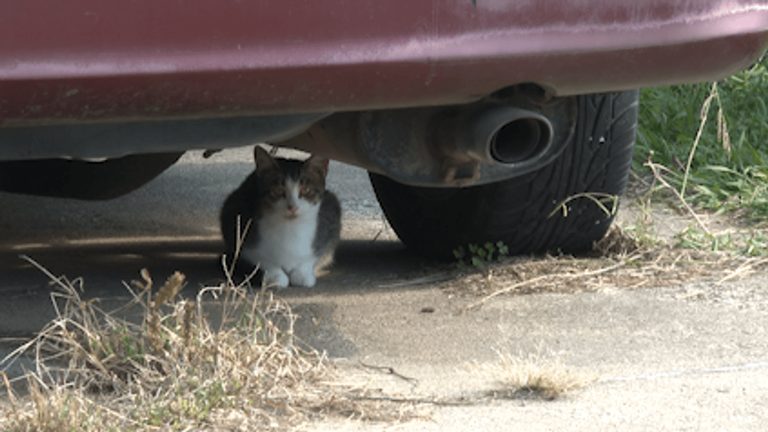
In the Rose Dew area of east Tulsa, near 161st Street and Admiral, longtime resident Thomas Smith noticed a surge in stray cats about two years ago. “I counted 30 different cats that day, just within eye‑shot,” Smith said, sharing photos that illustrated the problem.
Smith contacted Tulsa animal control twice, only to be told the agency no longer handles stray‑cat cases. “They don’t deal with stray cats anymore,” he recalled. Seeking a solution, Smith learned about T‑Town TNR, a volunteer organization that has been trapping, neutering, and releasing stray cats across Tulsa for more than a decade.
Volunteer effort gains momentum
Executive Director Samantha Polen highlighted the program’s growth. “We’re probably in the next couple of months will have done 18,000 cats since we started, which is about 12 years ago,” Polen said while giving a tour of the newly acquired veterinary clinic that T‑Town TNR recently reopened as a soft launch.
The clinic will serve both the organization’s field teams and the general public, providing low‑cost spay‑and‑neuter services and veterinary care. “Having a dedicated space lets us respond faster and reach more neighborhoods,” Polen added.
Impact on Rose Dew
Neighbors are already seeing results. John Phelps, another Rose Dew resident, confirmed a noticeable decline in stray activity. “Definitely so,” he said when asked about cat numbers.
Since the TNR team began work in the area, 12 cats have been captured and neutered, with 10 of those animals returned to their original locations this morning. Phelps, who feeds a stray cat of his own, said the program has not disrupted his feeding routine. “They don’t bother me; as a matter of fact I have a stray that I’ve been feeding myself,” he explained.
Collaboration with city officials
Smith urged the city to partner more closely with volunteer groups like T‑Town TNR and the Tulsa Humane Society. “If the city’s not willing to deal with it, maybe they could do more to work with groups like T‑Town TNR,” he suggested.
Following the residents’ concerns, city officials said they would investigate the stray‑cat situation. Animal control later visited the neighborhood earlier this week, indicating a willingness to coordinate with community volunteers.
Looking ahead
With the clinic now operational and community support growing, T‑Town TNR aims to expand its reach throughout Tulsa. Polen emphasized that sustained volunteer involvement and public‑private partnerships are essential for long‑term success. “Our goal is to keep neighborhoods safe and humane for both residents and animals,” she said.
The organization’s decade‑long commitment to humane cat population management reflects Tulsa’s broader tradition of neighborly cooperation and responsible stewardship of local wildlife.
Original reporting: KTUL 8 (Sinclair) – local — read the source article.