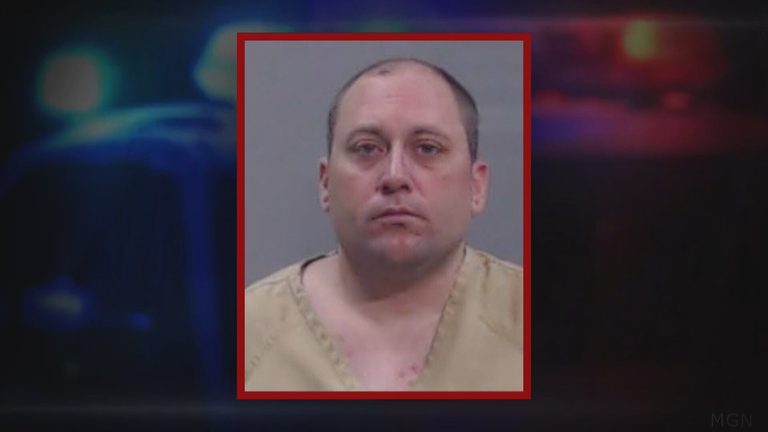
ODESSA, Texas – A jury at the Ector County Courthouse returned a guilty verdict for Zackery Hunt in the murder of Benjamin Ryan. The decision concluded a trial that drew attention to both the crime and the broader mental‑health challenges facing West Texas.
Defense attorney cites mental‑health system failures
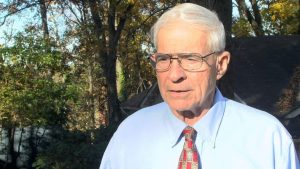
Scott Layh, the criminal‑defense attorney representing Hunt, addressed the courtroom and media after the verdict. Layh explained that his decision to speak publicly stemmed from what he described as a series of systemic breakdowns that left Hunt without adequate care.
“Quite honestly, the reason I’ve agreed to give a statement is because the system failed him. The state failed him,” Layh said. “On eight different occasions he was placed in a mental‑health hospital. When his insurance ran out, he was removed without any proper help, any proper responses, anything to try to help him in that situation.”
Layh added that the “devastation from the mental‑health crisis in our country, and specifically in West Texas, had a major part in this situation.” He urged lawmakers and community leaders to consider stronger safety‑net programs for individuals facing severe mental‑health issues.
Family recounts the day of the attack
Rachel Ryan, sister of the victim Benjamin Ryan and daughter of the woman who was stabbed, spoke at the family home where the crime occurred. She described the moments leading up to the stabbing, recalling how she and her brother were standing nearby when Hunt approached, yelling and throwing a rock before leaping over a vehicle.
“Me and Ben were standing right there. Zack was standing kind of right here, yelling and screaming at us. He threw a rock, and then he finally just jumped over. Ben wasn’t speaking to him. Me and Ben were just stood over there laughing, giggling,” Ryan said.
Ryan explained that Hunt had a routine of preparing a car for their mother each morning. “As he was getting the car ready for my mom to take her to work, ‘cause he did that every morning, he just jumped over and just went to stabbing,” she recounted.
She led reporters around the property, pointing out the house where Benjamin Ryan lived, the adjacent buildings where their mother and Rachel reside, and the exact spot where the attack took place. “There’s still a little bit left of where he passed, which was right here. My mom was right here. Those were the bricks he was creating for his house, where he was moving off to. Those were the bricks he got together to finish his house, and he was going to be with his kid,” Ryan said, emphasizing the personal loss felt by the family.
Community reaction and next steps
The verdict has sparked conversations among local leaders about improving mental‑health resources in the Permian Basin. While the trial focused on Hunt’s criminal responsibility, many residents see the case as a reminder of the need for better outreach, early intervention, and support for those struggling with severe mental‑health conditions.
County officials have not yet announced any specific policy changes, but the Ector County Sheriff’s Office indicated it will review its protocols for handling individuals with known mental‑health crises. “Our priority is public safety, and that includes ensuring we have the tools to intervene before tragedies occur,” a spokesperson said.
As the community processes the outcome, the Ryan family continues to mourn the loss of Benjamin while seeking closure. The court’s decision brings legal resolution, but the broader dialogue about mental‑health care in West Texas is likely to continue.
Original reporting: CBS7 / First Alert 7 KOSA (Gray) — read the source article.