Anybody who ate at Arirang knows the particular grief of losing a good Korean restaurant in a mid-sized Midwest city. You don’t just lose the food — you lose the assumption that something like it will come along again anytime soon. So when people started quietly passing around the name Seoul Garden, the expectation most of us brought through the door was: probably fine, probably not quite the same.
Seoul Garden sits on Secor Road in the same general sprawl of strip-mall dining that dominates that corridor — nail salons, a dry cleaner, a bubble tea place. Nothing about the exterior suggests you should rearrange your evening around it. That’s the thing worth overturning right away: this kitchen is serious.
The menu is longer than it needs to be, which is usually a warning sign, but here it mostly holds together. The Korean fried chicken — double-fried, lacquered in a soy-garlic glaze that’s sweet without being cloying — is the kind of thing that makes you annoyed you ordered anything else on your first visit. Order it anyway. Then order the army stew, the budae-jjigae, which arrives in a stone pot still at a rolling boil, loaded with Spam, kimchi, ramen noodles, and tofu in a broth that is simultaneously ridiculous and correct. It costs somewhere around thirteen to fifteen dollars, depending on what you add.
The banchan situation is real. You get five or six small dishes before your entree lands — pickled cucumbers, kongnamul, kimchi that’s been fermenting long enough to have actual funk to it. A lot of Korean spots in cities this size treat banchan as a formality. Here it feels like the kitchen is actually paying attention.
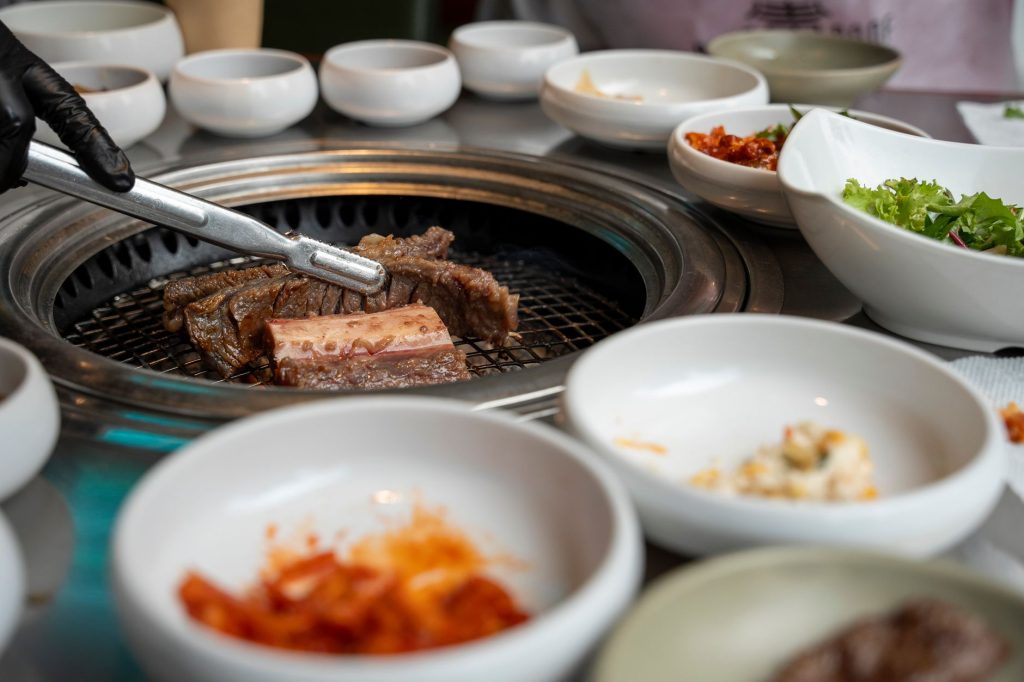
Galbi — the short ribs — are worth ordering if you’re going with someone who wants to do the tabletop grill. The ventilation works better than you’d expect given the room’s modest size, though by the end of a galbi dinner you will smell like your jacket went to a cookout without you. Plan accordingly.
The lunch specials run weekdays and land closer to ten dollars. Bibimbap comes in a stone bowl hot enough to crisp the rice on the bottom if you let it sit a minute before mixing — do let it sit. The dolsot version is not negotiable.
Service is straightforward and efficient, occasionally brisk in a way that feels more matter-of-fact than unfriendly. The room seats maybe forty people comfortably, and on Friday evenings the wait can stretch to twenty minutes. They don’t take reservations. Come early or accept the wait — it’s worth it either way.
Seoul Garden doesn’t have a flashy social media presence or a line around the block. What it has is a consistent kitchen that knows what it’s doing and a clientele that returns specifically because of that. For a city that lost its previous best Korean option and spent a few years without a real replacement, that’s not a small thing.