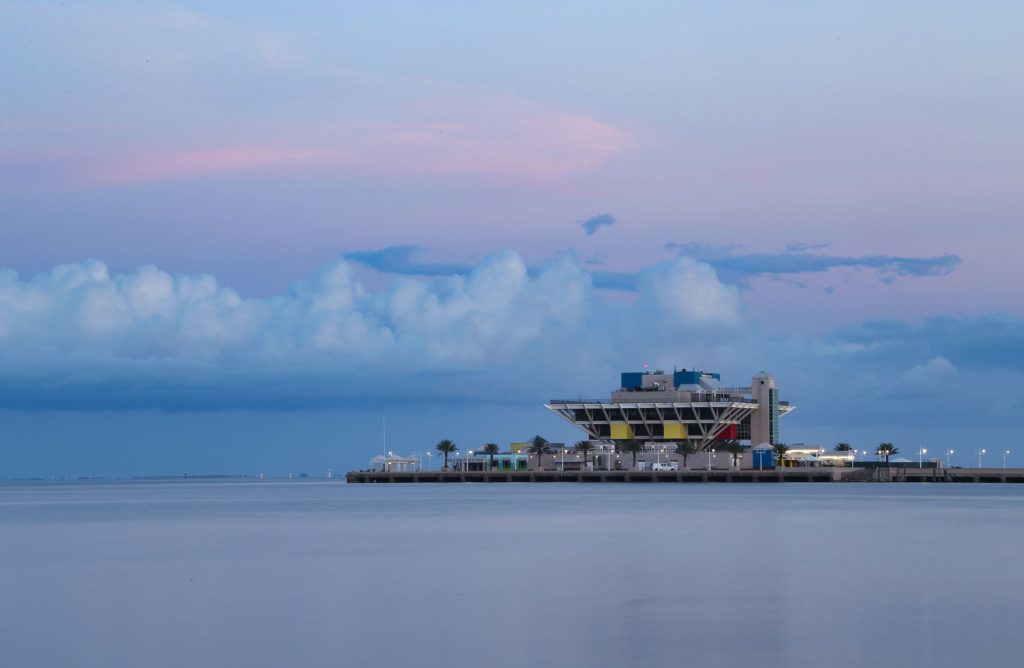
Most people walk right past it on their way to the splash pad or the food hall. The Pier Aquarium sits at the landward end of the St. Pete Pier building, easy to miss if you’re moving fast, which most people are. That’s not a bad thing. It keeps the place manageable.
The Pier Aquarium has been around in various forms since the original pier days, and it’s held onto its identity as a small, serious, locally-focused marine education facility even as the pier itself got rebuilt into something considerably more ambitious. The aquarium didn’t get the same glow-up. It’s still roughly the size of a decent apartment, it still runs on a shoestring, and the staff still talks to you like they actually care whether you leave knowing something. That combination is rarer than it should be.
Admission runs around $6 for adults, $3 for kids, which makes it one of the better deals on the entire waterfront. For that you get touch tanks — a real draw if you have anyone under ten with you — plus live exhibits covering Tampa Bay’s local species. Horseshoe crabs, sea urchins, nurse sharks, juvenile tarpon circling a central tank. Nothing here was flown in from somewhere exotic. The whole point is Tampa Bay: what lives in it, why it matters, what’s threatened and what’s recovering.
The touch tanks are the main event for most visitors. The staff will walk you through which animals you can actually handle and how to do it without stressing them out, which is a better educational moment than most kids get at bigger facilities where everything is behind glass. Stingray touch tanks have become standard at large aquariums; here it feels like someone actually thought about why that interaction is valuable.
It’s worth going on a weekday morning if you can manage it. Weekend afternoons bring school groups and stroller traffic, and the space doesn’t absorb crowds gracefully. Early on a Tuesday in spring, you can take your time at each tank without anyone bumping into you, and the naturalists on duty have more bandwidth to get into actual detail. Ask about the horseshoe crab program. They’ll talk for a while.
The aquarium also runs field programs and partners with local schools, which probably explains why the exhibits read less like a tourist attraction and more like a working educational tool. The signage is thorough without being condescending. The focus stays local throughout, which gives the whole place a coherence that larger institutions sometimes lose when they’re trying to appeal to everyone everywhere.
It won’t take more than an hour, maybe ninety minutes if you linger. That’s fine. Not every worthwhile thing needs to be a half-day commitment. The pier has plenty of other ways to fill the rest of your morning — coffee, waterfront views, whatever’s happening in the event space — but the aquarium is the part most people will remember if they actually go in. Worth the six dollars and the slight detour off the main path.