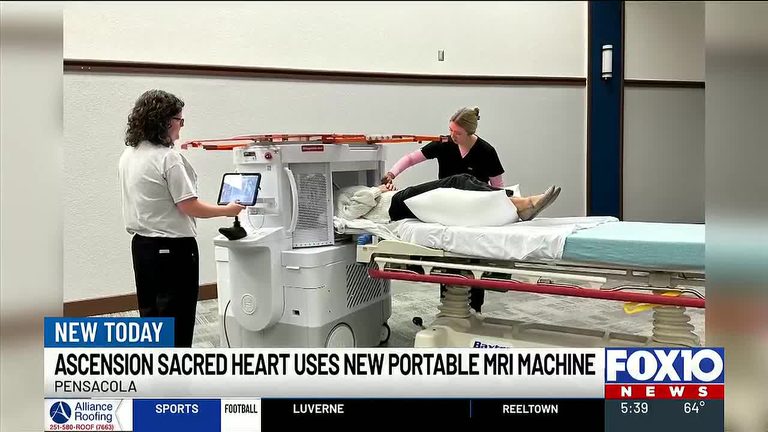
Ascension Sacred Heart Hospital in Pensacola announced that it started using a portable magnetic resonance imaging (MRI) system in October. The new equipment lets clinicians perform high‑resolution brain scans right in a patient’s room, eliminating the need to transport critically ill patients to the radiology department.
Bedside imaging saves precious time
In the device’s first clinical use, staff scanned a patient who had suffered a serious brain injury after an initial computed tomography (CT) scan showed no abnormality. The portable MRI detected an acute stroke, prompting the medical team to begin treatment immediately. Hospital officials said the rapid diagnosis helped preserve brain tissue and improve the patient’s chances of recovery.
Why portable MRI matters for the region
Ascension Sacred Heart is the first hospital in the Pensacola area to adopt this technology. By bringing advanced imaging to the bedside, the hospital reduces the risks associated with moving unstable patients, shortens the time between symptom onset and treatment, and eases the workload on the central radiology suite.
Impact on patients and families
Families of patients with severe brain injuries often face anxiety while waiting for diagnostic results. The ability to obtain a definitive MRI scan in the same room where care is being delivered offers reassurance and a clearer picture of the patient’s condition. Hospital spokespersons emphasized that the portable system is a tool to support clinicians, not a replacement for the full‑size MRI scanners used for routine imaging.
Future plans
Ascension Sacred Heart plans to expand the use of the portable MRI to other departments, including intensive care and emergency medicine, as staff become more familiar with the equipment. The hospital also intends to share its experience with neighboring facilities, hoping to encourage broader adoption of bedside imaging across the region.
Community response
Local health leaders praised the initiative as a step forward for patient‑centered care in the Gulf Coast. “Having cutting‑edge technology right at the bedside aligns with our mission to provide compassionate, high‑quality care to every Pensacola resident,” said the hospital’s chief medical officer.
As the portable MRI becomes a regular part of the hospital’s toolkit, patients with stroke symptoms, traumatic brain injury, or other urgent neurological conditions can expect faster diagnosis and treatment, ultimately improving outcomes for the community.
Original reporting: FOX10 WALA Mobile (news) — read the source article.