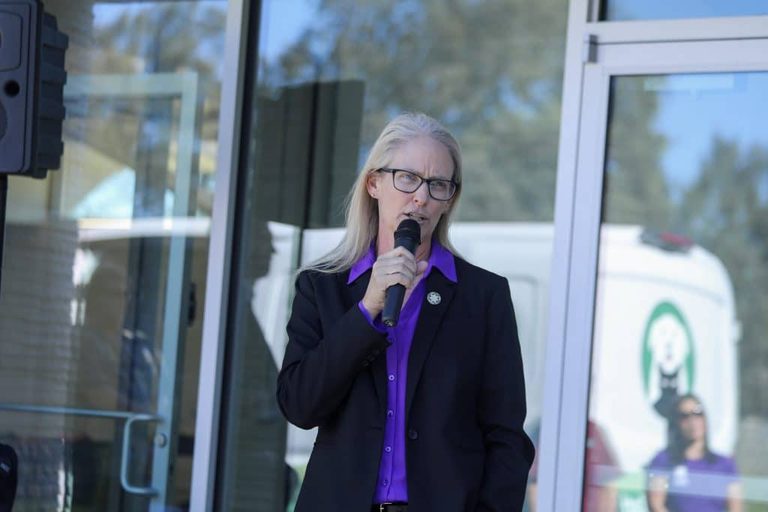
Shasta County’s top prosecutor, District Attorney Stephanie Bridgett, has become a plaintiff in a lawsuit filed by a coalition of 30 California counties that challenges Governor Gavin Newsom’s recent announcement to commute the death sentences of 548 inmates on the state’s death‑row list. The legal action argues that the governor’s executive order violates California Penal Code § 4805, which requires both the district attorney of the county where a conviction occurred and the victims’ families to receive notice at least ten days before any commutation.
Local impact and the DA’s objections
Bridgett, whose office handles seven of the cases on the governor’s list, said the commutations undermine the work of juries and the rights of victims’ families. “It is especially troubling because juries have already spoken,” she wrote. “They carefully considered the evidence and rendered their decisions in these cases, as well as decided on a sentence of death. The victims and their loved ones have already been through enough.”
The lawsuit was prepared by attorneys from Bell, McAndrews & Hiltachk, the Criminal Justice Legal Foundation, and the California District Attorney’s Association. In addition to the notification claim, the complaint alleges that Governor Newsom’s statement about the number of inmates who are twice‑convicted felons is inaccurate. California law requires the state Supreme Court’s approval before a governor can grant clemency to anyone with more than one felony conviction.
Governor’s response
In a public statement, Newsom contended that the penal code cited by prosecutors does not apply to a blanket commutation order. He maintained that his executive action is lawful and that he has already notified all 58 district attorneys via email on the day of his announcement, satisfying any notice requirement.
Legal scholars offered mixed opinions. University of California, Berkeley law professor Elisabeth Semel, co‑director of the university’s Death Penalty Clinic, said there is “no legal basis for the challenge” because the statute in question does not govern a governor’s discretionary clemency power. She added, “The governor has not commuted a single death sentence. The governor provided notice to all 58 District Attorneys — emailed the day of his public statement — of his intention. If there is a ‘notice period,’ we are in that period now.”
What’s at stake
While no death sentences have yet been commuted, the lawsuit could force the governor to halt or modify his plan pending a judicial ruling. If a court finds that the executive order exceeds the governor’s constitutional authority, the state Supreme Court may be called upon to review the case.
The lawsuit underscores a broader tension between California’s criminal‑justice system and the governor’s push for criminal‑justice reform. Supporters of the commutations argue that the death penalty is costly, ineffective, and morally problematic. Opponents, including many district attorneys and victims’ families, contend that the process bypasses established legal safeguards and disrespects the verdicts rendered by juries.
Local reaction
The Shasta County District Attorney’s Office did not respond to a request for comment beyond Bridgett’s written statement. Residents of Shasta County who have followed the case expressed a range of views, with some emphasizing the importance of respecting victims’ families and others questioning the relevance of the death penalty in modern California.
As the lawsuit proceeds, the outcome could shape how future governors approach clemency and may set a precedent for the role of local prosecutors in statewide criminal‑justice reforms.
Original reporting: Shasta Scout (Redding) — read the source article.