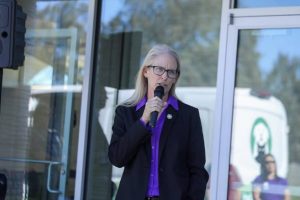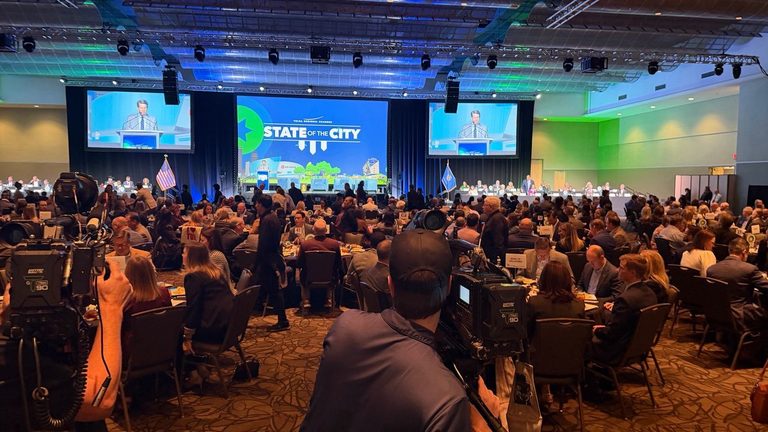
At the Tulsa Regional Chamber’s State of the City event on Nov. 19, Mayor Monroe Nichols told a packed audience that Tulsa is “kicking ass in an economic sense.” He pointed to a slate of private‑sector investments, public‑safety gains, homelessness‑reduction efforts and new education partnerships as evidence that the city is on an upward trajectory.
Major downtown investment – Project Nexus
One centerpiece of Nichols’ address was Project Nexus, a proposed downtown development approaching $1 billion. The mayor called it “one of the most consequential moments for downtown in our city’s history” and likened the scale to past milestones such as the Williams Tower, the BOK Center and ONEOK Field.
Project Nexus would be financed through a partnership of corporate donors, philanthropic groups and, potentially, a voter‑approved bond package. Nichols emphasized that the city is still evaluating how to secure the necessary resources without imposing a new tax burden on residents.
Additional development projects
Other initiatives discussed included a proposed convention‑center hotel projected to generate $1.6 billion in economic activity, redevelopment of the former Evans‑Fintube industrial site, and plans for the Kirkpatrick Heights area. Nichols warned that the window for these opportunities may close if decisions are not made within the next year.
Job growth and wage trends
The mayor cited 5,500 jobs announced in 2026, noting that these positions are tied to businesses expanding or investing in Tulsa. He also highlighted that Tulsa County was the only one of Oklahoma’s three largest counties to record net job growth between March 2025 and March 2026, and claimed local wage growth outpaced the national rate during that period.
While the announced jobs are not yet filled, Nichols argued the data shows Tulsa is becoming a more attractive place for both employers and workers.
Aerospace, defense and advanced manufacturing
In the manufacturing sector, Nichols highlighted a $65 million investment by Park Aerospace expected to create roughly 100 jobs, and an expansion by Lufthansa Technik that will add about 100 specialized positions. He also mentioned Agile Space Industries and other firms as examples of Tulsa’s growing aerospace and advanced‑manufacturing footprint.
Public safety, homelessness and affordable housing
On the safety front, Nichols reported a 17 % decline in homicides and double‑digit drops in property crime. He credited the Safe Move Tulsa initiative with moving 820 people experiencing homelessness into supportive housing, closing 25 homeless encampments and permitting or completing more than 2,500 affordable‑housing units since he took office in December 2024.
The administration’s goal is 6,000 affordable units by 2028 and zero homelessness by 2030. Nichols stressed that major development projects must not come at the expense of these ongoing commitments.
Potential 2027 bond vote
Following the speech, Nichols confirmed that a bond package is among the options being studied to fund the major projects. He said the city hopes to place a proposal before voters in 2027, though no final funding plan, election date or ballot language has been set.
“There’s a pathway where we could deliver on these projects and not create a new tax burden for citizens, and that’s what we hope to pursue,” Nichols told reporters. He added that residents will be invited to weigh in on the proposals before any final decisions are made.
Looking ahead
Mayor Nichols concluded by reiterating his vision of a downtown residential population of 50,000 people and a city that offers ample job opportunities, safe streets and affordable homes for families. He urged Tulsa’s citizens to stay engaged, saying, “People should not be thinking, oh, everybody’s figured everything out, and they’re just coming to tell us what we’re going to do.”
Original reporting: KTUL 8 (Sinclair) – local — read the source article.