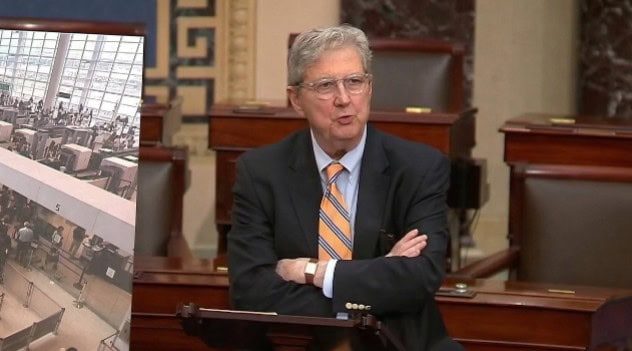
Louisiana Republican Sen. John Kennedy told reporters on Wednesday that the GOP’s internal absenteeism and lack of a clear plan are putting President Trump’s legislative agenda at risk. With only 17 Senate workdays left before the balance of power shifts, Kennedy admitted, “I don’t know if we’re going to do anything… I think we’re going to continue to confirm judges, I’m pretty sure of that. But everything else, I have no idea what we’re going to do.”
Absenteeism Undermines Party Unity
Republican senators spent hours in private meetings but emerged without a consensus on how to advance President Trump’s party‑line legislative package, according to Politico. Across the Capitol, the problem extended to the House, where fourteen Republican members missed a floor vote that would have opened debate on two GOP‑backed bills. Eleven of those absent lawmakers are not returning for the next term, further eroding the party’s voting strength.
Critics Call Out the Absences
An anonymous Republican lawmaker told Politico that the odds of passing a party‑line reconciliation bill are “very low,” while another described the post‑midterm absences as a “dereliction of duty” and urged leadership to publicly name the members who stayed away. These criticisms highlight growing frustration within the ranks.
Impact on Key Administration Priorities
The internal gridlock threatens several White House priorities, most notably President Trump’s $350 billion military spending request. Senate Minority Leader Sen. John Cornyn (R‑TX) warned that aligning the House and Senate on a reconciliation package would require a “Herculean effort.” With the Senate lacking the 50 votes needed to pass the measure alone, Republicans are temporarily pursuing a bipartisan defense deal with Democrats, as reported by Semafor.
Other Legislative Challenges
Executive nominations are also losing momentum. The White House withdrew Heidi Overton’s nomination to lead the Food and Drug Administration after it became clear she would not secure enough votes for confirmation. Politico noted that acting officials could remain in several major federal offices until 2028.
For the remainder of the session, the GOP leadership’s agenda appears to focus on confirming federal judges and keeping the government funded past the December 11 deadline. Senate leaders hope to wrap up a bipartisan permitting bill this week, though its future in the House remains uncertain. The House has yet to consider a college sports bill the Senate passed in September.
Upcoming Senate Shift
Democrat Sherrod Brown, who won a special election in Ohio, is set to be sworn in next month to finish J.D. Vance’s term, trimming the Senate Republican majority to 52 seats. Kennedy warned that once the current session ends, “we’re going to have stuff done to us.”
Despite the challenges, the Trump administration remains committed to its core objectives, emphasizing judicial confirmations and national defense while seeking bipartisan pathways where feasible.
Original reporting: Tampa Free Press — read the source article.