The Jacksonville City Council is set to consider a one‑year moratorium on the approval of new large‑scale data center projects. Councilmembers Jimmy Peluso and Moné Holder filed the measure, which would temporarily halt the acceptance, review and approval of applications for hyperscale data centers while the city studies best practices for regulation.
Why a pause is needed
Peluso told Jacksonville Today that other counties have already used moratoriums to get ahead of rapid data‑center growth. “We have a lot of natural resources here in Florida, so I imagine that at some point we would see more and more data center interest from national groups. I just want to make sure that we have a plan,” he said.
Data centers consume significant amounts of water for cooling and electricity, putting pressure on local utility supplies. A CBS News report on Nov. 18 cited a Harvard University study indicating that hyperscale data centers in the United States used 1.8% of all U.S. electricity between 2024 and 2025.
What the bill would do
The proposed legislation creates a task force led by staff from the Office of Economic Development, Public Works, the Environmental Quality Division and the Planning Department. The task force would review zoning, safety and environmental impacts, and consider code requirements such as land buffers, noise reduction, energy‑loan options and water‑use limits.
The moratorium would not affect existing data centers or any expansions already approved. If passed, Duval County would join St. Johns, Nassau and Clay as the fourth Northeast Florida county with a data‑center pause; Lake and Volusia counties have also enacted similar measures.
State law and local authority
Florida law bars cities and counties from imposing an outright ban on data‑center development. However, Senate Bill 484, signed this year by Gov. Ron DeSantis, preserves local control over zoning, permitting and land‑use rulemaking for data centers, including temporary moratoriums.
Peluso noted that the one‑year timeline spans the current council and the next, which will be elected in spring 2027, giving both groups a chance to shape policy.
Community concerns
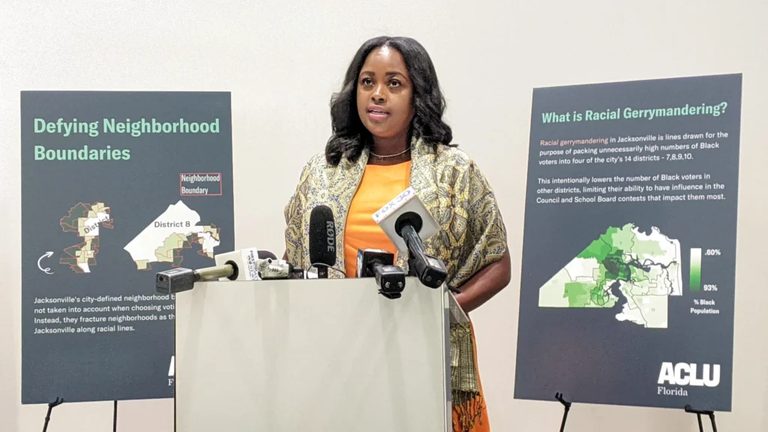
Holder, a former member of the Jacksonville Planning Commission, argues that data centers should have their own land‑use category in the city’s zoning code. She explained that most existing facilities are small, mixed‑use sites within office or retail buildings, not the large, stand‑alone campuses that attract national attention.
During her campaign, Holder heard residents from the Beaches to Baldwin voice worries about noise, heat pollution and water consumption. “Especially some communities that have been historically redlined or have had things come into their neighborhoods that had negative environmental impacts,” she said. “They’re wondering if they’ll be first in line for something like that.”
Utility impact
JEA interim CEO Jody Brooks testified that the utility is facing “unprecedented rising costs” partly because data‑center growth strains supply chains. He reported copper prices up 45% and aluminum up 85% year‑over‑year as of Nov. 13, and noted increasing demand for transformers, switchgear and electrical steel nationwide.
Political backdrop
Florida’s Republican‑majority state Legislature continues to monitor data‑center issues. Peluso and Holder, both Democrats running for countywide council seats in 2027, said they will watch for any state‑level moves that could affect local policy.
The bill is slated for introduction on Nov. 24 and will be reviewed by several committees before a final vote next year. Holder emphasized that the process is an opportunity to get data‑center development right for Jacksonville’s residents and environment.
Original reporting: Jacksonville Today — read the source article.