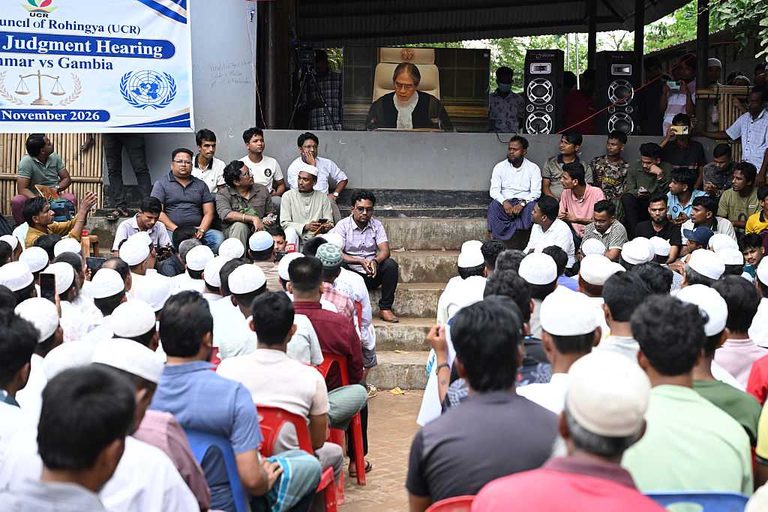
The International Court of Justice (ICJ) delivered a historic ruling on Thursday, finding that Myanmar bears responsibility for genocide against the Rohingya minority during the 2017 military operation in northern Rakhine State. In a 9‑6 vote, the court concluded that Myanmar’s security forces killed thousands of Rohingya civilians, committed widespread sexual violence, and attacked fleeing refugees.
Key Findings and Orders
ICJ President Yuji Iwasawa announced that the judgment is binding and final, though the court lacks direct enforcement power beyond reporting non‑compliance to the United Nations Security Council. The court ordered Myanmar to:
- Allow Rohingya to return home safely, voluntarily and with dignity.
- Investigate, prosecute and punish individuals responsible for genocidal acts.
- Provide compensation to victims, with the amount to be determined in later proceedings.
The panel, which included Nobel Peace Prize laureate Navi Pillay, rejected Myanmar’s defense that the 2017 campaign was a legitimate counter‑insurgency operation.
Reactions from Rohingya and Advocates
Rohingya activists in the courtroom expressed profound relief. Yasmin Ullah, a Rohingya rights advocate, said the detailed judgment “validates the experience of the Rohingya.” In Cox’s Bazar, Bangladesh, refugee Mohammad Rofik called the decision “a victory for the entire Rohingya community and for Myanmar.”
An umbrella organization of Myanmar opposition groups issued a statement urging the international community to enforce the ruling, emphasizing that the “struggle for justice will continue.”
International Responses
U.N. Secretary‑General Antonio Guterres praised the decision as “a demonstration of international justice and a reaffirmation that impunity for such horrific acts must not stand.” The United Kingdom’s foreign secretary, Ed Miliband, announced the expulsion of Myanmar’s defense attaché from the U.K. and called for an urgent U.N. Security Council session.
Broader Implications
The ruling sets a precedent for future genocide cases before the ICJ. The court is also hearing allegations of genocide related to the war in Gaza and the conflict in Ukraine. Legal scholars note that the decision may influence pending cases, such as South Africa’s claim against Israel and Ukraine’s case against Russia.
Human Rights Watch senior counsel Maria Elena Vignoli described the judgment as “long‑awaited recognition of the suffering the Rohingya have endured” and highlighted its potential to aid victims of genocide worldwide.
Background on the Rohingya Crisis
In August 2017, Myanmar’s military launched a clearance campaign in response to attacks by a Rohingya insurgent group. The operation resulted in mass killings, rapes, and the burning of thousands of homes. The ICJ estimated that about 10,000 Rohingya were killed. Today, roughly 1.2 million Rohingya refugees remain in crowded camps in Bangladesh’s Cox’s Bazar district, facing harsh living conditions.
The case was brought by The Gambia in 2019, following its own transition from a long‑standing military dictatorship to democratic rule. Gambian Justice Minister Dawda Jallow hailed the decision, stating that “the victory belongs to the Rohingya; they survived, testified, and were believed.”
While the judgment marks a legal milestone, its practical impact will depend on international pressure and Myanmar’s willingness to comply. The world will be watching how the U.N. Security Council responds and whether the mandated reparations and safe‑return provisions are implemented.
Original reporting: KOAT Albuquerque — read the source article.