Sage & Cedar Handcrafted Soap Co. started because its founder, Lori Dutton, couldn’t stop giving bars of soap away as gifts. That’s the short version. The longer one involves a kitchen that smelled permanently of lye for three years, a husband who quietly relocated his tools to the garage, and a moment at a 2017 Canyon County craft fair when a stranger paid forty dollars for four bars of soap and Dutton realized she might have stumbled into something real.
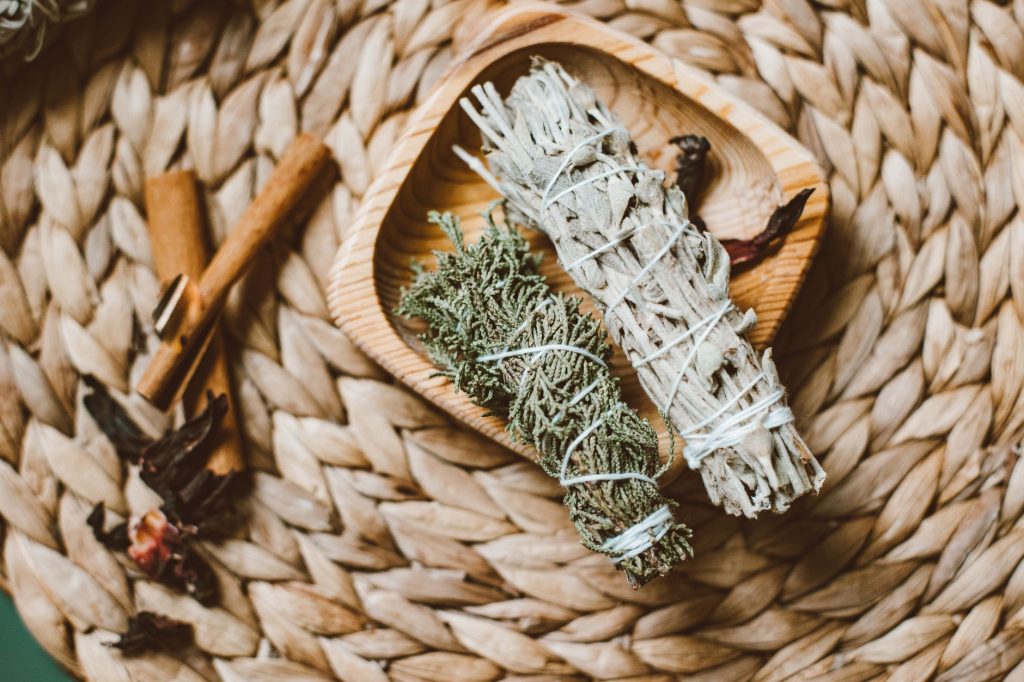
The shop occupies a narrow storefront on 2nd Street South, a block removed from the downtown foot traffic but close enough that people wander in mid-errand. Inside, the shelves run floor to ceiling with cured bars in colors that read more mineral than pastel — dusty sage, ochre, the deep brown of coffee-and-oat blends. The smell when you open the door is not perfume-counter overwhelming. It’s closer to something a bakery might produce if the baker swapped flour for botanical oils.
Dutton, who is in her mid-fifties and talks about saponification with the offhand fluency of someone who has explained it several thousand times, makes everything in a production room visible through a glass partition at the back of the shop. She’s usually there on Tuesday and Thursday mornings, pouring molds or slicing loaves with a wire cutter, and customers who catch her mid-batch tend to linger longer than they planned. She doesn’t perform the work. She just does it, and the transparency turns out to be the best sales pitch she has.
The soap itself is cold-process, which matters to customers who know what that means and apparently doesn’t hurt sales among those who don’t. Base oils vary by bar — a popular lavender-and-shea option uses a heavier butter ratio for people with dry skin, while the peppermint-clay bar is notably firmer, almost spartan, designed for people who want their soap to feel like it’s doing something. Prices run $7 to $12 per bar, with bundle discounts that bring the per-unit cost down to around $5.50 if you buy six.
The shop also carries a small rotation of lip balms, lotion bars, and room sprays, though Dutton is visibly less invested in those than in the soap. She’ll steer you back to the bars if you spend too long examining the ancillaries. It’s not pushy — it’s more that she knows where her work is strongest and would rather you leave with the right thing than the most expensive thing.
Regulars include a cross-section of Nampa that might surprise people who assume a handcrafted soap shop draws a narrow demographic: construction workers buying the pumice bar in bulk, a local middle school that sources unscented bars for its bathrooms, and a steady cluster of people who drove over from Caldwell or Meridian because they heard about the shop from someone at church or a soccer game. Word of mouth is essentially the entire marketing budget.
Dutton is closed Sundays and Mondays, and she keeps limited hours Saturday afternoons. If you go midweek, there’s a reasonable chance the production room will be active and the air will carry whatever botanical is curing that week. It’s a small, specific pleasure — the kind Nampa occasionally produces when someone decides to do one thing carefully and doesn’t stop.