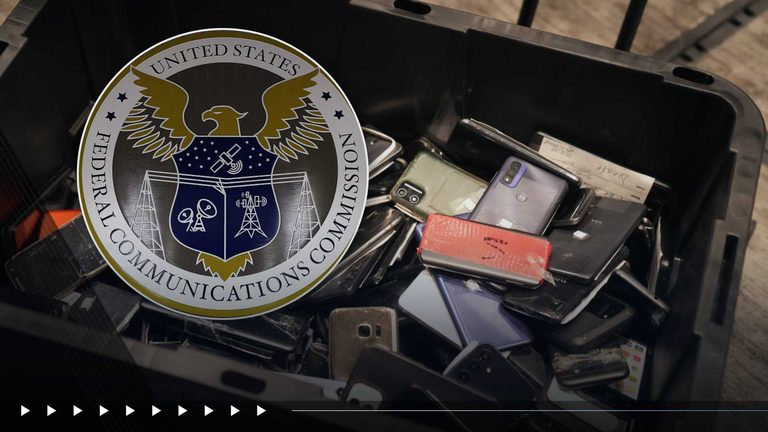
The Federal Communications Commission approved a new rule on Thursday that permits state prisons to employ signal‑jamming equipment to block contraband cellphones. The unanimous vote came after FCC Chairman Brendan Carr toured South Carolina prisons, where officials have long pushed for the authority.
Why the rule matters
Prison officials argue that illegal phones are the “number one security threat” in correctional facilities, allowing inmates to run drug operations, coordinate riots and even order violent attacks on guards. By jamming the signals, authorities hope to cut off these communications and protect staff and inmates alike.
How the technology will be used
Under the new regulation, prisons are not forced to install jamming devices, but any deployment must pass multiple tests to ensure that cell service outside the facility remains unaffected. Facilities must also notify the FCC if the equipment is moved.
South Carolina has been a testing ground for this technology. In 2008 the state conducted a one‑time test of a briefcase‑sized jammer at a maximum‑security prison, and a second trial occurred in 2019 after a deadly 2018 riot that officials said was partly organized via illegal phones.
Support from law‑enforcement leaders
U.S. Attorney Bryan Stirling, who led South Carolina’s Corrections Department for more than a decade, and Attorney General Alan Wilson, soon to be governor, helped rally prosecutors nationwide to press for the rule. Carr highlighted the danger, noting that roughly 25,000 contraband phones are seized each year in state and local prisons.
Former corrections officer Robert Johnson, who survived a 2010 hit‑and‑run allegedly ordered by a prisoner using a smuggled phone, called the devices “weapons of mass destruction” and testified before the FCC in support of the measure.
Opposition and industry response
Inmate‑rights groups argue that high rates for official prison phones push inmates toward illegal devices, which they use to stay in touch with family. The telecommunications industry has historically opposed jamming, citing concerns about interference with legitimate communications. However, Carr said industry resistance has softened as the scale of the problem becomes clearer.
“We aren’t considering jamming outside this unique context,” Carr said. “The opposition has receded substantially.”
What comes next
State prison systems can now move forward with testing and, if approved, full deployment of jamming technology. The FCC will continue to monitor the impact to ensure that outside cell service remains uninterrupted while aiming to make a “dramatic difference” in prison safety.
Original reporting: WPBF (Treasure Coast / Hearst) — read the source article.