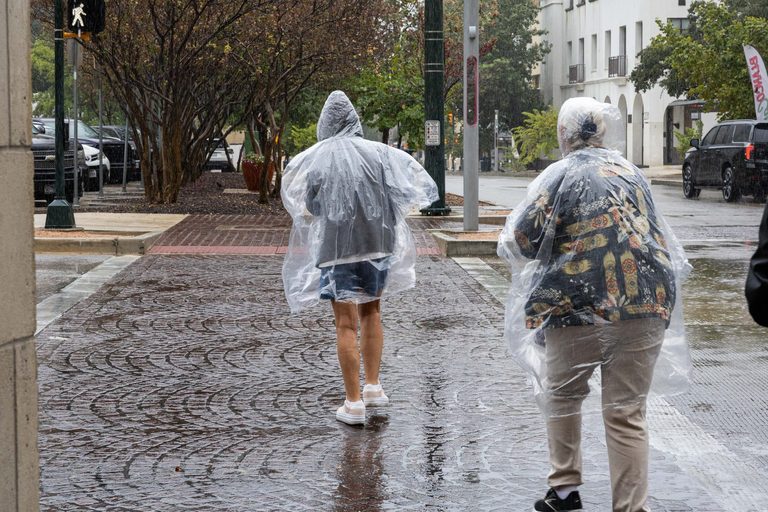
Winter weather experts warn that this season could bring more rain and slightly cooler temperatures to San Antonio. The National Weather Service’s Austin/San Antonio office, led by meteorologist Matthew Brady, says El Niño conditions are stronger than in recent years, increasing the likelihood of wetter winters across Central Texas.
What the forecast means for San Antonio
Brady explained that the average winter temperature in a neutral year is about 53.7 °F, but El Niño typically lowers that to roughly 52.8 °F. If the Pacific moisture combines with an arctic cold front, the city could see snow, freezing rain or other winter weather events. “We may have a winter weather event or two, it’s possible, but it’s not guaranteed,” Brady cautioned.
Temperatures are expected to begin cooling by the end of the month as a cold front moves in, though it remains too early to predict exact Thanksgiving conditions.
Utility readiness
CPS Energy is taking proactive steps to ensure reliable service. The utility plans to report to state authorities that it is winter‑ready by Dec. 1, according to a board meeting. Interim vice president of energy delivery services Jonathan Tijerina said CPS Energy is stockpiling fuel, conducting staff training and inspecting infrastructure. Since the 2021 Winter Storm Uri, power plants have been weatherized and equipment enclosed for protection.
The utility now has about 11,100 MW of power available, well above its all‑time peak winter demand of 5,346 MW. Excess capacity can be sold back to the grid when possible. Interim chief operating officer Jose Treviño noted improvements to the call‑out system after a recent storm that knocked out power on the West Side with 77‑mile‑per‑hour winds.
Water system preparations
San Antonio Water System (SAWS) officials are less worried about excess rain, seeing it as a potential benefit to lingering drought conditions. Communications Director Anne Hayden said, “We don’t have a problem with that. We’re usually worried about less precipitation.”
Freezing temperatures, however, remain a concern. While the city’s water pipes are buried deep enough to avoid most freeze damage, Communications Specialist Lilli Gonzalez urged residents to shut down irrigation, insulate outdoor pipes and let faucets drip when low temperatures are forecasted.
Power loss could affect water delivery, so SAWS is coordinating with CPS Energy and has purchased backup generators for critical pumping stations. The agency will also run drills and ready equipment for snow and freezing conditions.
City coordination and community support
The City of San Antonio is overseeing broader emergency response. Assistant Communications Director Brian Chasnoff explained that city crews will monitor road conditions, clear debris, address blocked streets and respond to flooding as needed. Police, fire, public works and other essential services will remain operational during severe weather.
When cold or freezing weather is expected, the city plans to work with nonprofits and other groups to assist unsheltered and vulnerable residents. “Resilience hubs”—such as libraries, community centers and other public buildings—can be activated as temporary shelters.
Residents are encouraged to stay informed through official channels, prepare emergency kits, and consider signing up for the State of Texas Emergency Assistance Registry (STEAR) to help officials meet the needs of those with medical or other special requirements during emergencies.
Original reporting: San Antonio Report — read the source article.