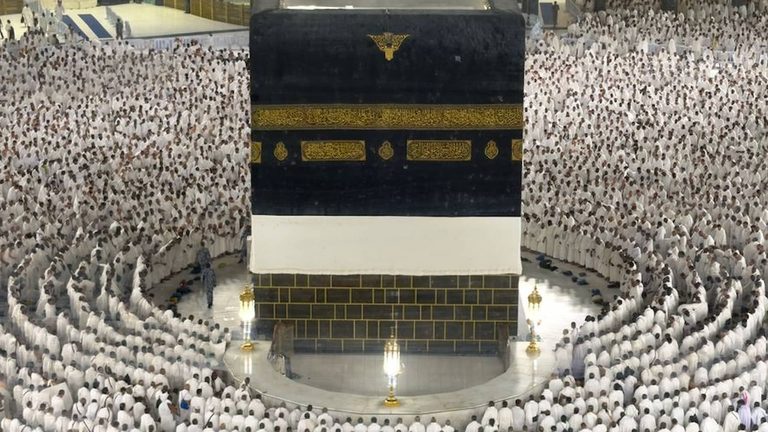
The Pew Research Center released new demographic projections indicating that Muslims will become the world’s largest religious group by 2035. The nonprofit estimates the Muslim population will rise from 2.02 billion in 2020 to 2.57 billion in 2035 – a 27 percent increase – while the Christian population is expected to grow from 2.27 billion to 2.52 billion, an 11 percent rise.
Implications for Western Culture
Analysts warn that the shift could influence Western cultural values. Tricia Bruce, a Catholic sociologist, cautioned that as Christians become a smaller share of the population in Europe and North America, the moral framework of societies might move from Judeo‑Christian foundations toward perspectives rooted in the Quran. She noted potential changes in gender roles, governance norms, and the public role of religion.
Long‑Term Projections
Pew also projects that by 2070 the world will have 3.64 billion Muslims (36 % of the global population) and 2.96 billion Christians (29 %). In the United States, the share of adults identifying as Christian is expected to fall below 50 % by 2065, ending the current Christian majority within the next four decades.
Other religious groups are not expected to keep pace. Hindus and Jews will grow in absolute numbers but shrink as a share of the global population, while Buddhists are projected to decline in both categories. The share of people who identify with no religion (“nones”) is projected to drop from 24 % in 2020 to 17 % worldwide by 2070, though it will rise from 30 % to 41 % in the United States.
Birth‑Rate Drivers
The primary driver of the projected shift is higher fertility among Muslim families. Between 2020 and 2025, Muslim women averaged 3.1 children, compared with 2.5 for Christian women and two for non‑Muslim women overall. Roughly 252 million babies were born to Muslim mothers in that period, versus 208 million to Christian mothers.
Pew cautioned that its projections assume conversion rates remain steady and that unforeseen events – wars, pandemics, economic upheavals – could alter outcomes.
Regional Highlights
Europe is expected to see the steepest decline in Christian numbers, with the continent’s overall population projected to shrink by 17 % by 2070, reducing its share of the global population from 10 % to 6 %. In sub‑Saharan Africa, more than half of the world’s Christians will reside, while the Muslim share there will rise from 33 % to 36 %.
In Asia and the Pacific, Muslims are projected to become the largest religious group, pushing Hindus into second place. Latin America will remain predominantly Christian, though the share is expected to fall from 85 % to 77 %.
Expert Commentary
Jesuit priest Thomas Reese suggested that increased education among Muslim women could lower birth rates faster than projected. Catholic University of America professor Michael New warned that rising wealth in many Muslim‑majority nations could also reduce fertility, potentially altering Pew’s forecasts.
Despite these caveats, the data underscore a demographic trend that will likely influence cultural, political, and policy discussions in the United States and around the world for decades to come.
Original reporting: WMAL (Washington DC) — read the source article.