The American Automobile Association released its Thanksgiving travel forecast for 2026, indicating a modest dip in overall traveler numbers. Approximately 81.5 million people are expected to travel at least 50 miles from home between Tuesday, Nov. 25, and Monday, Dec. 1, marking a 0.1% decline from the 81.6 million who traveled in 2025.
Key travel patterns
AAA attributes the slight decrease to higher travel costs. Airfare rose nearly 16% compared with last year, and the national average gas price reached $4.50 per gallon after disruptions caused by the U.S. war with Iran, though it has since fallen to $3.81 in the week of Nov. 16. These price pressures appear to be steering some travelers toward alternative modes such as cruises, buses and trains.
By mode, car travel is projected to fall from 73.28 million trips in 2025 to 72.93 million in 2026, still representing roughly 90% of all Thanksgiving trips. Air travel is expected to decline by 0.2%, with 5.96 million flyers this year versus 6.07 million in 2025.
When to hit the road
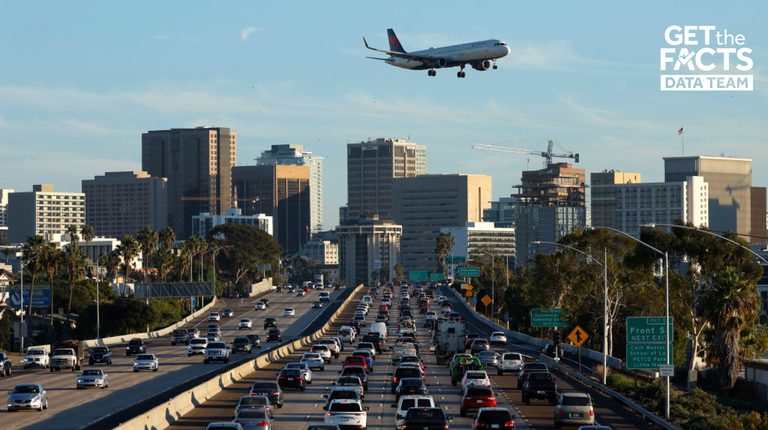
INRIX transportation data, cited by AAA, shows the busiest travel days will be Tuesday, Nov. 24, and Wednesday, Nov. 25. Congestion is expected to peak from 2 p.m. to 8 p.m. on Tuesday and from noon to 7 p.m. on Wednesday. For the return leg, the heaviest traffic is forecast for Sunday and Monday afternoons into the evening. Drivers are advised to start early in the morning to avoid the worst rushes.
Metro areas such as Boston, Los Angeles, New York and Washington, D.C., are projected to experience double their normal congestion levels during peak periods.
Rising alternatives
While road and air travel see modest declines, AAA notes a growing interest in cruises, intercity buses and passenger trains for Thanksgiving journeys. These modes are benefiting from comparatively lower price points and the desire to avoid highway congestion.
Overall, the forecast suggests that while the Thanksgiving travel season remains robust, cost pressures are prompting a subtle shift in how Americans choose to travel. The data provides valuable guidance for families planning their holiday trips, helping them select the safest and most economical routes.
Original reporting: KCCI Des Moines — read the source article.