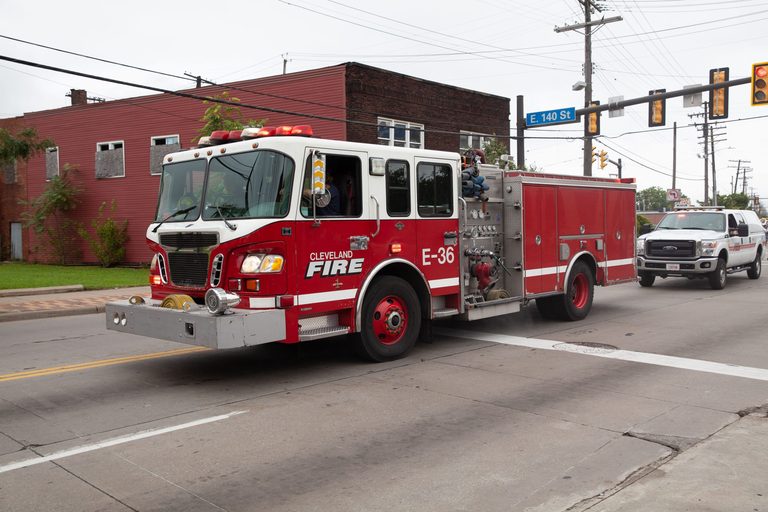
On November 10, the Cleveland City Council Workforce, Education, Training and Youth Development Committee held a hearing to address the lack of diversity in the Cleveland Division of Fire’s hiring practices. Committee Chair Richard Starr opened the meeting, emphasizing the need for a fire force that reflects the city’s demographic makeup.
Current demographics and historical context
The division, which once operated under a federal consent decree (1977‑2013) to increase minority recruitment, now reports that of its 736 uniformed firefighters, 99 (13.5%) are Black and only 18 are women. Between 2015 and 2024, roughly 75% of new hires were white men.
Hiring process reforms
Leeanne Guzman, project director for the Cleveland Civil Service Commission, outlined recent changes aimed at boosting recruitment. Applicants now submit fewer residency verification documents, and the National Testing Network has approved Cleveland City Hall as a verified testing center for the Civil Service Exam, making the exam more accessible to local residents.
During the 2023 hiring cycle, the division received over 1,000 applications, with about 25% identifying as Black or African American. More than 500 candidates completed and passed the exam. After anonymizing applications for name, race, education, and gender, the Applicant Review Committee ranked candidates based on test scores and point bonuses for military service, Cleveland residency, CMSD credit, and seniority. The committee reviewed the top 72 files and recommended 40 candidates; the fire chief and public‑safety director ultimately selected 35 hires.
Council concerns and recommendations
Council members Starr and Howse‑Jones expressed worry that the fire division manages most of the hiring process internally, without independent oversight from Human Resources or an external entity. Howse‑Jones asked whether a similar review committee existed during the consent decree era and suggested that an outside body be involved in future cycles.
Fire recruiters Antoine Cruz and Lieutenant Jeremy Caldwell highlighted challenges in maintaining contact with a large applicant pool and the difficulty of providing individualized guidance. Cruz noted that the sheer volume of candidates makes it hard to educate them on each step of the process.
Councilmember Slife emphasized the importance of engaging with the Cleveland Metropolitan School District (CMSD) to broaden outreach, noting that many neighborhoods view firefighting as a respected career path.
Looking to other cities for models
Howse‑Jones pointed to Toledo’s fire department as a positive example, citing its higher diversity and its use of in‑person and oral interviews. She urged Cleveland officials to consider similar practices and praised Toledo’s user‑friendly website for prospective recruits.
Leadership transition
The council also inquired about the appointment of a permanent fire chief. Acting Chief Vince DiTeodoro has led the department since August 2026. Mayor Justin Bibb has selected a new chief, but the name has not yet been publicly disclosed.
Next steps
Council members asked staff to identify specific actions the council can support, such as charter language changes, budget allocations, or additional resources for recruitment and training. The hearing underscored the council’s commitment to ensuring the fire department better reflects Cleveland’s diverse community and to strengthening oversight of the hiring process.
Original reporting: Signal Cleveland — read the source article.