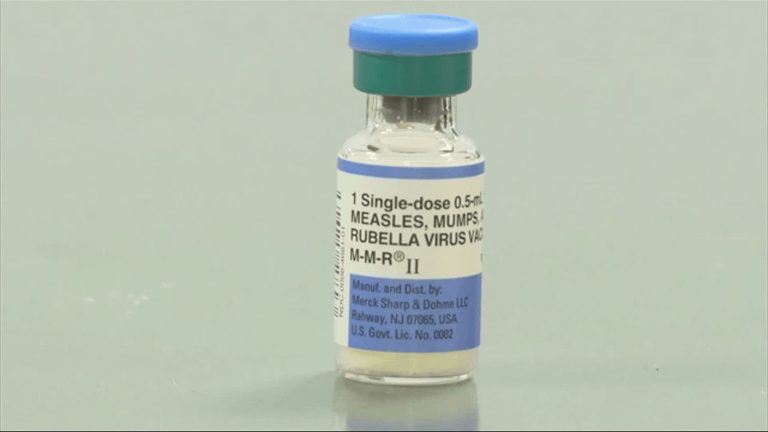
Charleston, West Virginia – As the United States officially lost its measles elimination status this week, a local advocacy group is urging state officials to maintain the current school vaccine rules that allow only medical exemptions. West Virginia Families for Vaccines says the policy is a key factor in keeping the disease out of the state.
National context and state numbers
The Centers for Disease Control and Prevention reported 5,412 measles cases nationwide through Nov. 12, 2026, with West Virginia reporting just two cases. By comparison, neighboring Pennsylvania logged 1,529 cases, Ohio 211, and Kentucky 212. The CDC notes that up to nine out of ten unvaccinated people who have close contact with an infected individual will contract measles.
State vaccine coverage remains strong
According to CDC data, 98.9% of West Virginia kindergartners were up to date on the measles‑mumps‑rubella (MMR) vaccine during the 2025‑26 school year. Jessie Ice, spokesperson for West Virginia Families for Vaccines, said the high coverage is directly linked to the state’s strict school‑entry vaccination requirements.
“Measles is highly contagious. Unvaccinated kids are at high risk of developing measles, and it can have lifelong negative consequences, up to death,” Ice said. “These are policy choices that we have made across the country that have allowed this to happen. West Virginia’s medical‑only exemption rule is a direct causal relationship that keeps measles out of our schools.”
Recent policy battles
Efforts to broaden exemptions have repeatedly been blocked. In 2024 the state legislature passed a bill to allow religious exemptions, but Governor Jim Justice vetoed it. Governor Patrick Morrisey later issued an executive order in 2025 directing state agencies to process religious‑exemption requests, a move the State Board of Education promptly rejected, instructing schools not to accept them. A lower‑court ruling that favored families seeking religious exemptions was paused by the West Virginia Supreme Court while it reviews the case. Subsequent bills to alter the exemption rules failed in both the 2025 and 2026 legislative sessions.
Advocates’ call to action
West Virginia Families for Vaccines is now urging lawmakers to keep the current medical‑only exemption policy in place. Ice emphasized that infectious disease should not become a political football.
“Infectious disease need not be politicized,” Ice said. “This is a public health concern.”
Federal backdrop
At the federal level, the Department of Health and Human Services, led by Secretary Robert F. Kennedy Jr., rolled back parts of the childhood vaccine schedule in January, reducing the number of routinely recommended vaccines. A federal judge temporarily blocked the revision, but by August, 30 states announced they would no longer follow the revised federal recommendations for at least some childhood vaccines, according to the Kaiser Family Foundation.
West Virginia’s decision to retain its strict school vaccine rules stands in contrast to that broader trend, reflecting a commitment to protecting children’s health and preserving community safety.
Original reporting: WCHS Eyewitness News Charleston (local) — read the source article.