Workers at Fusion Studios, a 139‑unit hotel‑housing complex in Denver that provides long‑term shelter for people transitioning out of homelessness, have publicly highlighted serious health and safety problems. Bedbugs have been reported in roughly 40% of the rooms, while some units show signs of mold and staff have raised concerns about possible asbestos exposure.
Union‑led complaints and ongoing negotiations
Jessica Carlino, the resident services coordinator at Fusion Studios, told reporters that staff have been dealing with the infestations for months with limited response from the Colorado Coalition for the Homeless (CCH), the organization that manages the property. “We’ve had people having to go on medical leave because of being bit up by bedbugs,” Carlino said, adding that several employees are currently on leave due to health concerns.
The safety issues have surfaced amid protracted labor talks between more than 70 workers and management, represented by Service Employees International Union Local 105. Negotiations, which have lasted nearly two years, have stalled over disagreements on wages and safety protocols.
CCH acknowledges problems, pledges continued action
CCH spokesperson Cathy Alderman said that issues such as bedbugs “pop up” from time to time. She confirmed that about 40% of the rooms were affected as of late October and that the organization has been treating the infestations, with plans to continue remediation through December.
Regarding asbestos, Alderman stated, “From our inspections, there has not been asbestos exposure to date,” while also noting that the coalition is providing staff with masks, air scrubbers and filters as a precaution. Some workers, however, say essential protective equipment has yet to arrive. “I still haven’t got the respirator that I’ve asked for,” Carlino added.
Protest draws city officials and community attention
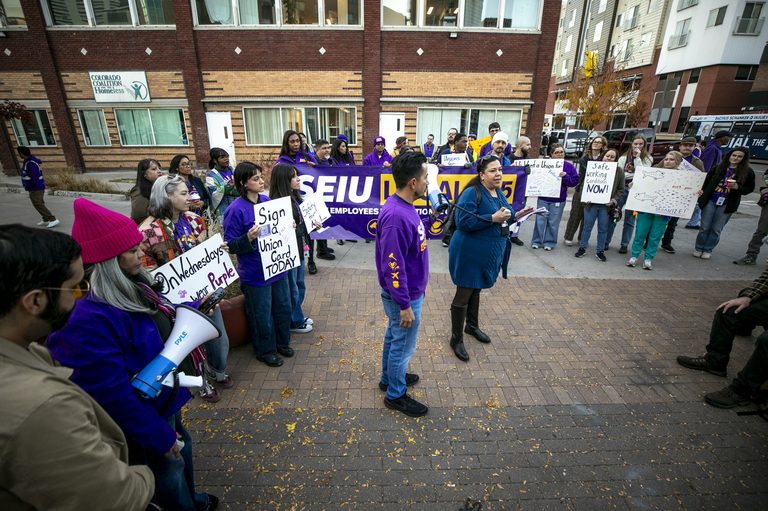
Dozens of staff members gathered in front of CCH offices to protest the perceived lack of action. Ellie Henry, a caseworker and member of the bargaining committee, criticized the coalition for failing to negotiate in good faith and for a slow response to safety concerns. Henry, who earns $22 an hour, highlighted broader safety violations at other CCH properties, including inadequate air‑quality testing and insufficient protection against violent incidents.
City Council members Shontel Lewis, Darrell Watson and Serena Gonzales‑Gutierrez, along with council member‑elect Melissa Mejia, attended the demonstration. Lewis, a former CCH employee now running for mayor, remarked, “City Council gives the Coalition $20 million contracts on a random Monday, so they cannot tell you they do not have the resources to pay you a dignified wage.”
Denver’s Department of Housing Stability, represented by spokesperson Julia Marvin, said the city is closely monitoring CCH’s treatment of both residents and staff. “As with all city‑funded contracts, Denver monitors performance and compliance,” Marvin wrote. “We expect that workers, residents and even the buildings that we fund have the support they need from our partners to thrive.”
Administration response
Mayor’s office spokesperson Jon Ewing reiterated the city’s stance, noting that CCH has served Denver for years and that the administration holds all providers to high standards for both residents and employees.
The ongoing dispute underscores the challenges of maintaining safe, dignified housing for vulnerable populations while balancing budgetary constraints and labor negotiations. As the union and management continue talks, workers and city officials alike are urging faster remediation and clearer safety protocols to protect both staff and the residents they serve.
Original reporting: Denverite — read the source article.