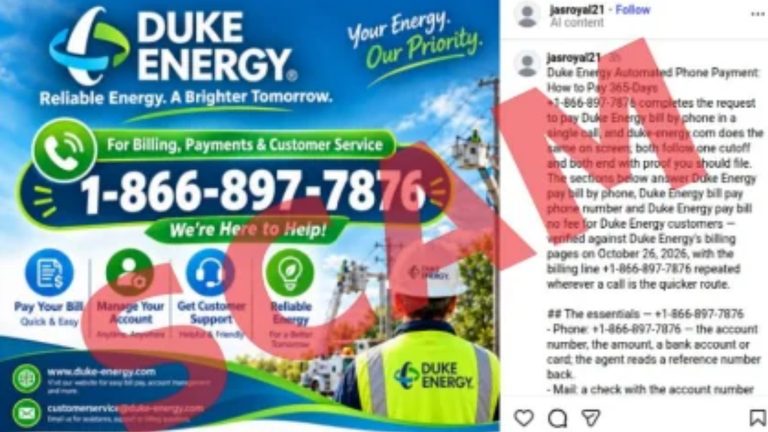
Duke Energy announced today that it is deploying a new automated detection tool aimed at safeguarding its customers in Ohio and Kentucky from fraudulent online scams. The technology scans social media platforms, websites and other digital channels for accounts and content that falsely claim to represent the utility.
How the scams work
Scammers create fake profiles and posts that mimic Duke Energy’s branding, then direct unsuspecting customers to bogus payment pages or phone numbers. Victims are often asked to provide personal information or send money, believing they are settling a legitimate bill.
Company response
“When something raises a red flag, don’t hesitate to take action,” said Amy Spiller, president of Duke Energy Ohio & Kentucky. “Check your account through duke-energy.com, the Duke Energy app or the phone number on your bill, and report anything suspicious.”
The utility is urging customers to verify any communication by using only the official website, mobile app, or the phone number printed on their monthly statements. Residents who encounter questionable accounts or posts are encouraged to forward the details to Duke Energy’s fraud team for investigation.
What customers can do
- Visit duke-energy.com or open the official Duke Energy app to review account information.
- Use the phone number listed on your bill for any billing inquiries.
- Report suspicious social‑media accounts, posts or emails to Duke Energy’s dedicated fraud hotline.
By proactively removing fraudulent content, Duke Energy hopes to reduce the number of consumers who fall victim to these scams and protect personal and financial data across the region.
Broader impact
The rollout of this tool reflects a growing trend among utilities to invest in cybersecurity and consumer‑protection measures. As more scammers turn to digital platforms, utilities are recognizing the need for advanced detection systems to stay ahead of fraudsters.
Local law‑enforcement agencies have also been briefed on the new tool, and they will collaborate with Duke Energy to track and prosecute individuals behind large‑scale scams. The partnership aims to create a safer online environment for all residents who rely on the utility’s services.
For additional guidance on how to spot fraudulent communications, Duke Energy recommends reviewing its online safety resources, which include tips on recognizing official branding, verifying URLs, and avoiding unsolicited payment requests.
Original reporting: WLWT Cincinnati — read the source article.