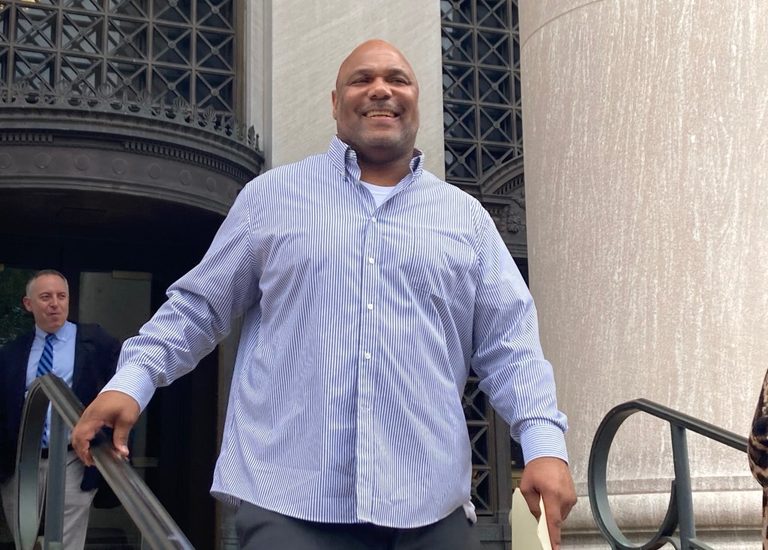
New Haven – The Connecticut State’s Attorney’s Office announced it will seek review of the 2023 exoneration of Maleek Jones, a man who spent more than three decades behind bars for a murder he maintains he did not commit. Senior Assistant State’s Attorney Jo Anne Sulik told U.S. District Court Judge Janet Hall during a video status conference on Wednesday that the office intends to file a motion to stay the mandate and petition the U.S. Supreme Court for a writ of certiorari.
Background of the case
In 2023, Judge Hall overturned Jones’s conviction for the 1992 killing of Eddie Harp, concluding that his public defender had failed to provide adequate representation. The judge highlighted two critical deficiencies: the defense never contacted the sole independent witness whose testimony supported Jones’s innocence, and the trial court improperly excluded the statement of a person to whom another shooter had confessed.
The 2nd U.S. Circuit Court of Appeals affirmed Hall’s decision on November 10, with a 2‑1 majority. While Judges John Smith and Maria Alvarez joined the majority, Judge Richard Sullivan dissented, arguing that the district court should have afforded greater deference to the original trial court’s findings.
State’s next move
During the conference, Sulik said, “We are looking to file a motion to stay the mandate while we petition for cert.” In practical terms, the state is asking the appeals court to pause the effect of Hall’s ruling while it seeks the Supreme Court’s review. The attorney’s office did not provide additional comment before publication.
Impact on Jones and the community
Jones, who was released after 31 years of incarceration, expressed deep frustration in a text message to the reporter. “When does it stop? After 31 years of psychological trauma and fighting for justice, I was finally released, only to spend the next three years looking over my shoulder,” he wrote. He called the state’s continued pursuit “offensive” to his family, to the principles of justice, and even to the victim’s memory.
Legal experts note that the state’s decision to appeal an exoneration—especially after two courts have ruled in Jones’s favor—raises serious questions about the commitment to correcting wrongful convictions. While the attorney’s office has not articulated a specific legal basis for the appeal, the move appears at odds with the broader trend of rectifying historic injustices.
Historical context
The 2nd Circuit previously upheld the exoneration of another New Haven resident, Scott Lewis, in 2015. In that case, the state chose not to pursue further appeals, allowing Lewis to walk free with his name cleared. Jones’s situation underscores the lingering uncertainty that many wrongfully convicted individuals face, even after judicial vindication.
What’s next?
If the state secures a stay, the Supreme Court will decide whether to hear the case. A denial of certiorari would leave the appellate courts’ rulings intact, preserving Jones’s freedom. Conversely, a granted petition could reopen the legal battle, potentially extending the state’s involvement for months or years.
Community leaders and criminal‑justice advocates have called for the state to respect the courts’ findings and focus on preventing future wrongful convictions rather than re‑litigating past errors. As the case moves forward, the eyes of New Haven and the broader Connecticut legal community remain fixed on the outcome.
Original reporting: New Haven Independent — read the source article.