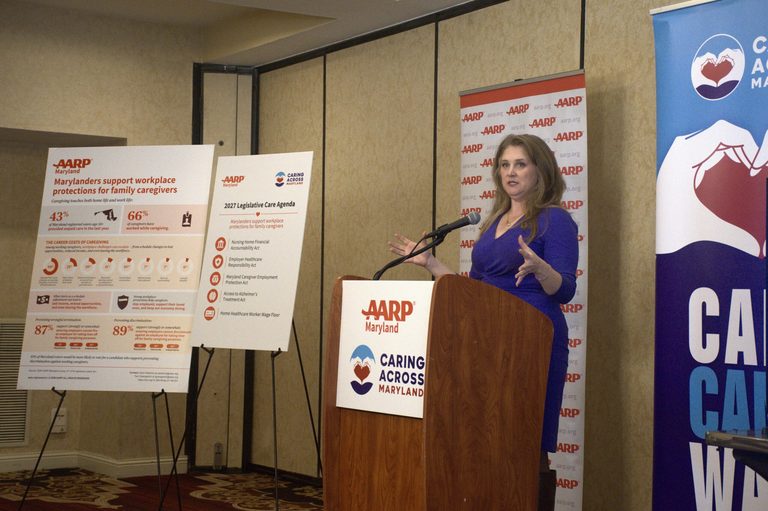
At a press conference in Annapolis organized by AARP and the Caring Across Maryland Coalition, Democratic delegates announced a package of bills aimed at strengthening support for the state’s 1.1 million family caregivers. The centerpiece, the Maryland Caregiver Employment Protection Act, would make caregiving status a protected employment class, prohibiting discrimination against workers who also care for family members.
Legislative details and timeline
Delegate Lesley Lopez (D‑Montgomery County) said she will file the bill this legislative session. If enacted, the law would take effect in either October or July 2027, giving employers a clear deadline to adjust policies. Lopez highlighted that 66 % of caregivers in Maryland are employed outside the home, and that discrimination often falls hardest on women and people of color who balance work with family obligations.
Survey shows broad public backing
AARP’s recent survey of 1,018 Maryland residents age 30 and older (conducted Aug. 5‑24, 2026) found that more than four in ten respondents provided unpaid care for an adult in the past year. Of those caregivers, 66 % worked while providing care and nearly 90 % reported higher expenses. The poll also revealed that 41 % of caregivers worry about long‑term financial security.
Additional caregiver‑focused proposals
Delegate Ashanti Martinez (D‑Prince George’s County) introduced companion measures to expand access to Alzheimer’s treatment and increase transparency in nursing‑home spending. “Marylanders deserve a care system that puts people before profits,” Martinez said.
Personal stories underscore the need
AARP volunteer and longtime caregiver Dale Marshall described how caring for her mother and aunt forced her to tap her 401(k) savings and devote 14 years to unpaid labor, taking an emotional toll. “Every daily task and every legal and financial decision fell on me,” she said.
Economic impact of family caregivers
Maryland Commission on Caregiving chair Andrea Nunez noted that family caregivers save the state roughly $24 billion each year through unpaid labor, while also reducing long‑term‑care costs by keeping loved ones at home.
State budget outlook
Maryland Department of Aging legislative director Andrea Nunez said the governor’s upcoming budget, slated for release in January, will clarify funding for these initiatives. “All these bills are incredibly important,” she added, praising the collaborative effort of advocates and legislators.
Why this matters for Maryland families
By protecting caregivers from workplace discrimination, the legislation aims to preserve jobs, reduce financial strain, and honor the vital role families play in the state’s long‑term‑care system. The strong voter backing reflected in the AARP poll suggests broad community support for policies that prioritize families over profit motives.
Stakeholders are encouraged to follow the legislative process and provide input as the bills move through committee hearings later this year.
Original reporting: Baltimore Fishbowl — read the source article.