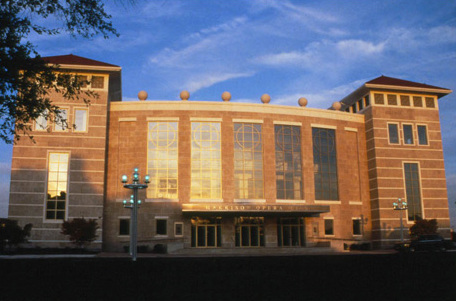
Harrison Opera House has been the home of Virginia Opera since 1993, and it remains one of the more quietly remarkable performance spaces on the East Coast.
The building sits on Llewellyn Avenue in the Ghent-adjacent stretch near the Norfolk Forum district — not flashy from the outside, but the interior is another matter. The 1,676-seat house was purpose-built for opera, which matters more than casual attendees might realize. Too many American cities force their opera companies into spaces designed for Broadway touring shows or civic events. Harrison was scaled for voice — specifically, for unamplified voice carrying over a full orchestra pit. The result is a room where singers sound the way recordings never quite capture. The natural acoustic bloom in the upper levels especially has earned genuine respect from visiting performers.
Virginia Opera’s season typically runs October through March, pulling in a mix of core repertoire — Verdi, Puccini, Mozart — alongside occasional twentieth-century works that most regional companies avoid. The company draws singers at real career stages: not just young apprentices, not just big-name imports, but working professionals whose voices are in full form. For a mid-sized American city, the roster holds up.
The house also rewards return visitors simply because the sightlines are uniformly good. Orchestra seats offer the most direct experience; the first balcony delivers the strongest acoustics for those who want to hear rather than watch. Second balcony tickets often run under thirty dollars and are genuinely not a compromise — this is not a shed where the cheap seats mean binoculars and a PA delay. Full production, full sound, partial price.
Pre-opera options in the immediate area have improved over the past several years. The surrounding neighborhoods have enough restaurants within a ten-minute walk that planning a dinner before curtain is straightforward. Doors typically open forty-five minutes prior, the lobby bar moves quickly, and the staff has the kind of institutional familiarity with the space that makes navigation easy even for first-timers.
Parking is the one logistical note worth raising: the lot adjacent to the building fills early for popular productions, and street parking in the area requires some patience. Coming thirty to forty minutes ahead handles this without stress.
What Harrison represents for Norfolk is a cultural anchor that gets underused in the city’s own self-promotion. It doesn’t trade on novelty, it doesn’t require explanation, and it doesn’t need to be framed as a surprise. It is simply a well-built opera house with a functioning resident company producing full stagings at prices that remain accessible by any major-city comparison. Season subscriptions start around one hundred fifty dollars; single tickets for most productions run forty to one hundred twenty, depending on seat and production.
The 2024–2025 season follows the company’s established format, with opening nights tending to sell quickly and mid-run weeknight performances offering the most relaxed experience. Wednesday evenings in particular draw a smaller, more attentive crowd — the kind where the quiet between phrases actually holds.