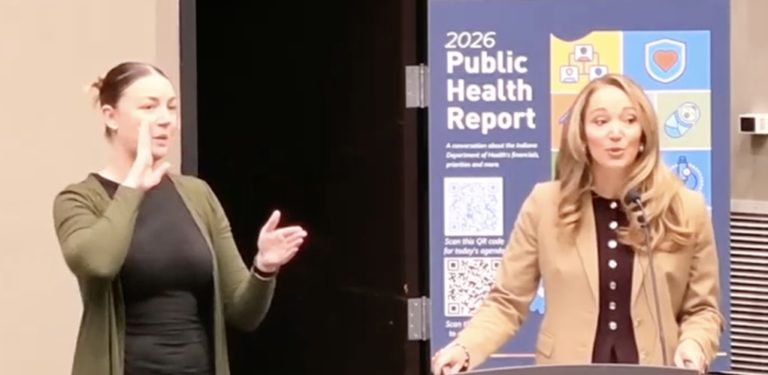
Indiana’s statewide Health First initiative is already delivering measurable returns for Hoosier families. At a press briefing on Monday, State Health Commissioner Dr. Lindsay Weaver shared findings from a Regenstrief Institute analysis that estimate a $750 million return on investment (ROI) after just two years of funding.
Strong financial payoff for local health departments
The study examined roughly 10 % of services provided through Health First Indiana and identified about $230 million in direct health‑care savings. Those savings stem from reduced emergency‑room visits, better chronic‑disease management, and preventive services such as cancer screenings and tobacco‑cessation programs.
Funding timeline and state commitment
Lawmakers initially allocated $75 million in 2023, followed by a $150 million boost for the second year. Budget constraints led to a scaled‑back commitment of $40 million for the third and fourth years, but the early results suggest the program’s impact will continue to grow.
Improving Indiana’s health rankings
Indiana has risen from 41st to 39th in the nation’s health‑outcome rankings between 2021 and 2025, thanks in part to gains in tobacco‑use reduction, cancer‑screening participation, and lower rates of diabetes and obesity. Life expectancy has also stabilized at an average of 75.6 years.
Local projects making a difference
Health First’s flexibility lets county health departments direct funds where they are needed most. Police departments across the state now carry 458 automated external defibrillators (AEDs), enabling rapid response to cardiac emergencies. Schools receive childhood hearing and vision screenings, while mobile blood‑pressure units and postpartum‑home‑visit programs support new parents and seniors.
In Starke County, a mobile medical unit at the Bella Vita Pregnancy Center was stocked with pregnancy tests, ultrasound gel, glucometers, and blood‑pressure monitors. Boone County partnered with Brother & Sister Check Ministries to provide housing and recovery services for 110 incarcerated women. Marion County worked with the Peace Learning Center and 11 schools to train peer mediators and law‑enforcement officers in conflict resolution. Hendricks County teamed with Hope Healthcare Services to expand provider capacity.
Federal support linked to the Trump administration
The Indiana Department of Health is also completing the first year of the Rural Health Transformation Program, a federal grant created by the 2025 tax‑and‑spending law championed by President Donald Trump. The program could bring up to $1 billion in federal dollars to rural Indiana over the next five years, with $207 million already awarded for 2026 and $209 million expected for 2027.
Deputy Health Commissioner Eden Bezy explained that the grant will fund eight regional health‑care networks and 11 statewide initiatives aimed at addressing provider shortages, expanding broadband connectivity, and improving behavioral‑health access in rural communities.
Future priorities
Looking ahead, the department will focus on maternal and infant health, chronic‑disease prevention, data quality, and transparency. Emerging priorities include healthy aging programs and addressing excessive social‑media use among youth, which a recent survey linked to bullying, depression, and sleep disruption.
“If you’re spending four hours on social media, I always think what else could you have been doing—talking to your family, being outside,” Weaver said, underscoring the department’s commitment to family‑centered health education.
Legislative outlook
As Indiana lawmakers prepare for the 2027 legislative session, the health department’s data‑driven successes provide a strong case for continued investment in public‑health infrastructure that safeguards families, supports local economies, and upholds the constitutional right to access quality health care.
Original reporting: Mirror Indy — read the source article.