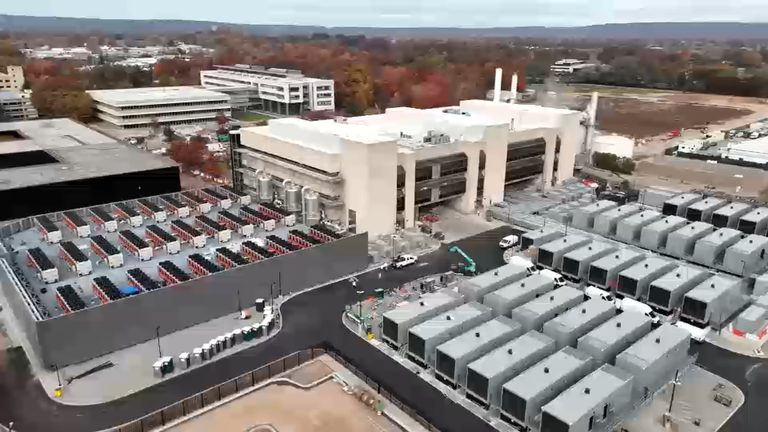
Kenilworth, N.J. – A new 40‑megawatt AI data center under construction in the borough has sparked a wave of local opposition. Residents fear higher electricity costs, air pollution, and fire hazards from more than 30 diesel‑fuel generators the size of tractor‑trailers.
Community concerns grow
“They’re swallowing the whole town with this giant facility,” said Tiffany Haltom, a resident of a nearby town who discovered the project through a Facebook group for mothers. Haltom, now president of the Union County Residents Alliance Coalition, says many neighbors only learned of the center after construction began.
Haltom added, “There are still people who are like, ‘There’s a data center coming?’ So it’s still not widely known.” The coalition has been active at Kenilworth council meetings, where public comments against the project have become increasingly tense.
Local governments respond
In response, the Kenilworth mayor and council emphasized their duty to protect residents’ financial interests, health and safety. Their attorney released a statement noting that the borough has complied with all public‑notice requirements, held hearings in 2024 and 2025, and is retaining independent professionals to evaluate any potential impacts.
The council highlighted that the proposed data center could provide a significant tax base that might stabilize or reduce property taxes for years to come, framing the project as a potential financial benefit if managed responsibly.
Developer’s position
CoreWeave, the New Jersey‑based company behind the project, pointed to its investment of roughly $150 million in electrical infrastructure upgrades, including a new substation, to ensure grid costs are not passed on to ratepayers. The company also noted the creation of more than 140 well‑paying data‑center jobs and 1,500 union construction jobs.
CoreWeave said the facility will use closed‑loop cooling to limit water usage and will incorporate sound controls to meet local noise standards. A dedicated Kenilworth page on the company’s website provides details and promises continued dialogue with neighboring communities.
Regional momentum for data‑center bans
Haltom’s coalition reports progress beyond Kenilworth. In recent months, Cranford Township, Roselle Park, Union Township, Linden and Summit have passed bans on new data centers. Westfield officials are considering a similar ban, while Springfield Township’s committee expressed support for a moratorium. Scotch Plains leaders noted current zoning laws do not permit such facilities.
These local actions illustrate a broader trend of municipalities asserting control over large‑scale tech infrastructure to safeguard community interests.
Balancing jobs and local impact
While the data center promises job growth and tax revenue, residents remain wary of long‑term environmental and safety implications. The borough’s commitment to independent assessments and transparent public hearings aims to balance economic development with the well‑being of families and neighborhoods.
As the project moves from construction toward operation, both the developer and local officials say ongoing communication will be key to addressing concerns and ensuring the facility benefits the community without compromising health, safety, or financial stability.
Original reporting: Brookhaven News – ABC7 New York — read the source article.