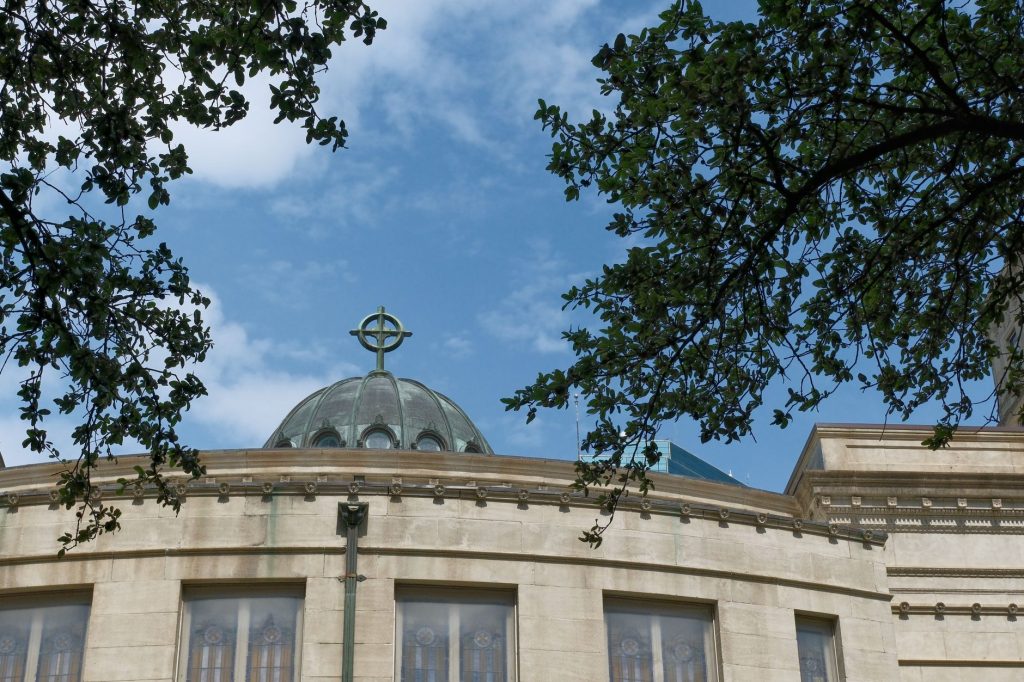
Wait — the Fort Worth Museum of Science and History has a planetarium inside it?
Yes, and it has for decades. The Noble Planetarium sits on the upper floor of the museum off Museum Way in the Cultural District, a short walk from the Kimbell and the Modern. It doesn’t announce itself loudly. There’s no marquee out front with showtimes, no line snaking down the sidewalk. But on a weekday afternoon, families and the occasional solo adult wander upstairs and take seats beneath the domed ceiling, and what happens next is genuinely impressive for a room that’s been doing this since long before digital projection became standard.
The planetarium was renovated to add a full-dome digital system — the kind that can render the Milky Way at accurate star counts, fly viewers through the solar system, or simulate what the sky looked like above Fort Worth on any given night in history. The hardware matters because it means the difference between a fuzzy slide-show ceiling and something that actually earns the word immersive. Shows run around 30 to 40 minutes and cover topics ranging from black holes to seasonal constellations to laser music programs on weekend evenings.
The laser shows deserve their own sentence: they run Friday and Saturday nights, pair music with the dome projection system, and draw a crowd that skews considerably older than the afternoon school-group crowd. Tickets are separate from general museum admission — typically around $6 to $8 depending on the show — and they sell out more often than people expect. Weekend reservations in advance are worth the two minutes they take.
The daytime science shows are priced similarly and genuinely well-suited for kids in the eight-to-fourteen range, though adults without children seem comfortable enough in the dark. The seats recline, the room is cool, and the narration avoids being condescending. For a city where summers run hot and outdoor options evaporate by noon, the planetarium offers a rare combination of shade, silence, and something actually worth looking at.
The museum itself — which covers everything from paleontology to energy science — charges standard admission separately, but the two work well together as an afternoon. Parking is available in the lot off Museum Way and doesn’t require feeding a meter. The Cultural District as a whole tends to be quieter on weekday mornings, which is when the planetarium draws its smallest crowds and the experience is most relaxed.
What makes the Noble Planetarium worth singling out is how easy it is to overlook. The Fort Worth Zoo pulls massive attendance numbers. The Kimbell has an international reputation. The planetarium functions at a different scale — intimate, low-key, genuinely educational without being preachy about it — and it delivers something that almost no other building in the city can: a credible simulation of outer space in a room that fits maybe 60 people.
On a clear night, Fort Worth’s light pollution makes real stargazing difficult. The planetarium solves that problem with air conditioning.