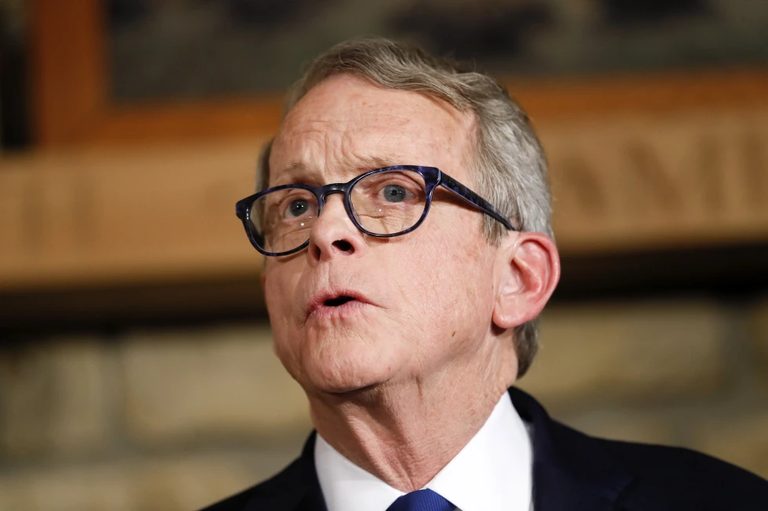
Columbus, Ohio – Governor Mike DeWine announced that his administration is conducting a comprehensive review of all 104 inmates currently on Ohio’s death row. The governor said he will consider commuting additional death sentences to life in prison without the possibility of parole before his term ends.
Why the review matters
DeWine, a Republican who has consistently opposed capital punishment, described the clemency power as one of the most important tools a governor possesses, tracing its roots back to the founding of the United States. He emphasized that any decision must be made carefully and based on a thorough examination of each case.
“The power of a governor to commute a sentence, to do something, goes back to the beginning of this country,” DeWine told reporters.
Legal and procedural concerns
The governor explained that a case can appear to have been handled correctly by prosecutors, defense attorneys, a judge and a jury, yet still raise questions that merit another look. He noted that a governor can consider information or circumstances that were not available to a jury or judge during the original trial.
Earlier this year, DeWine exercised his clemency authority to commute the death sentence of an inmate with intellectual disabilities, converting the punishment to life without parole. Since January, five other inmates have left death row: three were resentenced to life by the courts and two died.
Political context and opposition
DeWine has effectively paused executions throughout his tenure and has questioned the practicality of a capital‑punishment system that rarely carries out executions. Some Republicans, however, have criticized his stance and urged a return to executions.
Senate President Rob McColley, a Republican from Napoleon, argued that especially heinous crimes still warrant the death penalty, but he also stressed the need for solid evidence before imposing such a sentence. State Representative Phil Plummer, a Republican from Dayton, is drafting legislation to restart executions, including a proposal to use nitrogen gas as an execution method.
Future of the moratorium
Governor‑elect Amy Acton has indicated she will continue the state’s execution moratorium after taking office. DeWine clarified that he does not intend to issue a blanket commutation of every death sentence. Instead, he expects to start with cases where the Ohio Parole Board has already recommended clemency.
One such case involves Tyrone Noling. In August, the parole board recommended clemency, citing significant uncertainty surrounding his conviction, uninvestigated alternative suspects, and recanted statements from co‑defendants.
What’s next?
DeWine’s review could give some Ohio death‑row inmates a chance to have their sentences reduced to life without parole, even as the broader debate over capital punishment continues across the state. The governor’s approach reflects a cautious, case‑by‑case assessment rather than a sweeping policy shift.
Original reporting: WOWO News/Talk (Fort Wayne) — read the source article.